
Your automated CRM is likely creating relationship debt, driving customers away by making them feel like data points instead of people.
- Authentic connection is built through specific, context-aware micro-interactions, not generic personalization like using a first name.
- Tools like personal video, adaptive tone, and empathetic chatbots can create powerful human signals within your automated workflows.
Recommendation: Shift your focus from optimizing automation efficiency to designing a system of asynchronous intimacy that proves to each customer they are seen and valued.
As a CRM manager, you’ve meticulously built automated journeys. You have sequences for onboarding, engagement, and re-engagement. Yet, you’re watching churn rates hold steady, or worse, creep up. Your open rates are decent, but the replies are non-existent, and that feeling of a genuine brand connection is missing. You’re doing everything the marketing playbooks say—personalizing with first names, segmenting your lists, sending birthday emails—but your customers still feel distant, like anonymous ticket numbers in a vast, indifferent system.
The common advice is to “be more authentic” or “show empathy,” but these are platitudes, not strategies. They don’t tell you how to scale a human touch without hiring a massive support team. You’ve been led to believe that the opposite of cold automation is manual, time-consuming effort. But what if the true key isn’t about abandoning automation, but infusing it with strategic, human-centric micro-interactions? What if you could create powerful moments of connection that feel personal, even when delivered at scale?
This is the core of reducing digital alienation. It’s about moving beyond the noise of generic marketing to create clear, human signals that build trust and loyalty. This guide moves past the clichés to give you tactical methods for weaving genuine humanity back into your digital customer relationships. We will explore the psychological reasons customers leave, and then provide concrete actions—from using personal video to designing empathetic chatbots—that can transform your CRM from a soulless machine into a powerful relationship engine.
This article will guide you through the core strategies and tactics needed to bridge the digital divide. Below is a summary of the key areas we will cover to help you build more lasting and profitable customer relationships.
Summary: Humanizing Your Customer Relationships for Lasting Loyalty
- Why Customers Leave Brands That Treat Them Like Ticket Numbers?
- How to Use Personal Video Messages to Warm Up Cold Leads?
- Formal vs Casual: Which Tone Builds Trust With Gen Z Customers?
- The Frequency Error That Turns Your Helpful Emails Into Spam
- How to Use Chatbots to Answer Instantly Without Losing Empathy?
- Chatbot vs Human Support: Which Builds Better Long-Term Loyalty?
- How to Respond to Detractors to Win Them Back Within 24 Hours?
- How Lasting CRM Relationships Reduce Acquisition Costs by 40% for UK SaaS?
Why Customers Leave Brands That Treat Them Like Ticket Numbers?
The fundamental reason customers churn from seemingly efficient brands is a phenomenon we can call “relationship debt.” This occurs when a company prioritizes transactional velocity over relational depth. Every automated, impersonal interaction is a small withdrawal from the bank of customer trust. When a customer feels like a case file or a ticket number, their loyalty erodes because their identity as an individual has been ignored. The relationship lacks the core human traits of transparency, authenticity, and empathy. Without these, there is no psychological glue holding the customer to the brand beyond the utility of the product itself.
This isn’t just a feeling; it’s a powerful driver of consumer behavior. Research confirms this deep-seated need for personal connection, finding that 80% of customers are more likely to do business with brands that provide personalized experiences. When we say “personalized,” we mean something far deeper than mail-merging a `{{first_name}}`. It means demonstrating that you understand their needs, respect their time, and see them as a partner in a value exchange, not just a target for extraction. A customer who feels seen and understood is far more forgiving of a minor product flaw or a price increase than one who feels anonymous.
Case Study: The Zappos Human-Centric Culture
Zappos famously built its brand not just on selling shoes, but on fostering genuine human relationships. Their strategy was to empower employees to have open-ended, unscripted conversations that went far beyond the transaction. The company culture actively encourages staff to treat customers like friends, going above and beyond their job descriptions to deliver “Wow” moments. This approach established Zappos as a benchmark in customer loyalty, proving that investing in personalized, exceptional service based on core human values creates an almost unbreakable bond.
Ultimately, treating customers like ticket numbers is a short-term efficiency play with devastating long-term costs. It creates a fragile relationship where the customer is perpetually open to being poached by any competitor who offers a slightly better price or a hint of genuine human connection. The churn you’re seeing isn’t a failure of your product; it’s a failure of the relationship.
How to Use Personal Video Messages to Warm Up Cold Leads?
One of the most powerful micro-interactions you can deploy to combat digital anonymity is the personal video message. In a sea of text-based emails, a short, authentic video is a powerful human signal that immediately cuts through the noise. It conveys tone, body language, and sincerity in a way that text simply cannot, creating what can be described as asynchronous intimacy. The lead can consume it on their own time, but the feeling it generates is one of a direct, one-to-one conversation. This isn’t about high-production-value marketing videos; it’s about quick, genuine messages recorded on a webcam or phone.
The impact of this tactic is not just theoretical; it’s proven to drive results. Incorporating video into sales outreach can be incredibly effective, with some data suggesting that working video into outreach improves chances of closing by nearly 130%. For a CRM manager, this is a game-changer. Imagine replacing a generic “checking in” email with a 30-second video where you say the person’s name, mention their company, and connect your solution to a specific challenge you’ve observed. The effort is minimal, but the perception of care and personalization is immense.

As the image above illustrates, the setup doesn’t need to be a Hollywood studio. An organized space, good lighting, and a clear message are all it takes to create a professional and personal touchpoint. The goal is authenticity, not perfection. A slight hesitation or a natural smile makes the video more human and trustworthy than a polished, scripted performance. It proves a real person took the time to create something just for them.
Action Plan: Your High-Impact Video Prospecting Script
- Hook (5-10 seconds): Start with a direct, personalized greeting. Hold up a whiteboard with their name or mention their company to prove it’s not a generic video.
- Address Pain Point: Connect your offering to a specific challenge they face. Reference a recent LinkedIn post, a company announcement, or industry trend.
- Show, Don’t Tell: Briefly share your screen to show something relevant—a quick tour of a feature, their website with a suggested improvement, or a compelling graph from a case study.
- Clear Call-to-Action: End with a simple, low-friction next step. Instead of “book a demo,” try “Is this worth a 15-minute chat next week?”
- Keep it Human: Maintain a natural, conversational tone. Smile and be yourself. The goal is to start a conversation, not to close a deal in 60 seconds.
Formal vs Casual: Which Tone Builds Trust With Gen Z Customers?
Choosing the right tone is another critical micro-interaction, especially when communicating with younger demographics like Gen Z. This generation has grown up in a digital world saturated with inauthentic corporate messaging. They have a highly developed filter for marketing-speak and are drawn to brands that communicate with transparency and authenticity. For a CRM manager, using a stiff, overly formal tone in an email or chat is an immediate signal of “corporate noise,” causing them to disengage. A conversational, human tone, in contrast, signals that there’s a real person on the other side.
This preference is backed by data. One study highlights that a significant portion of younger audiences feel alienated by traditional corporate communication. This disconnect happens when the tone feels irrelevant, forced, or inhuman. They don’t want brands to force slang or memes; they want them to be straightforward, respectful, and genuine. The goal is authentic conversation, not a desperate attempt to sound “cool.” It’s about relaxing the formal structures and writing more like you speak, using contractions, occasional emojis where appropriate, and a generally more direct and open style.
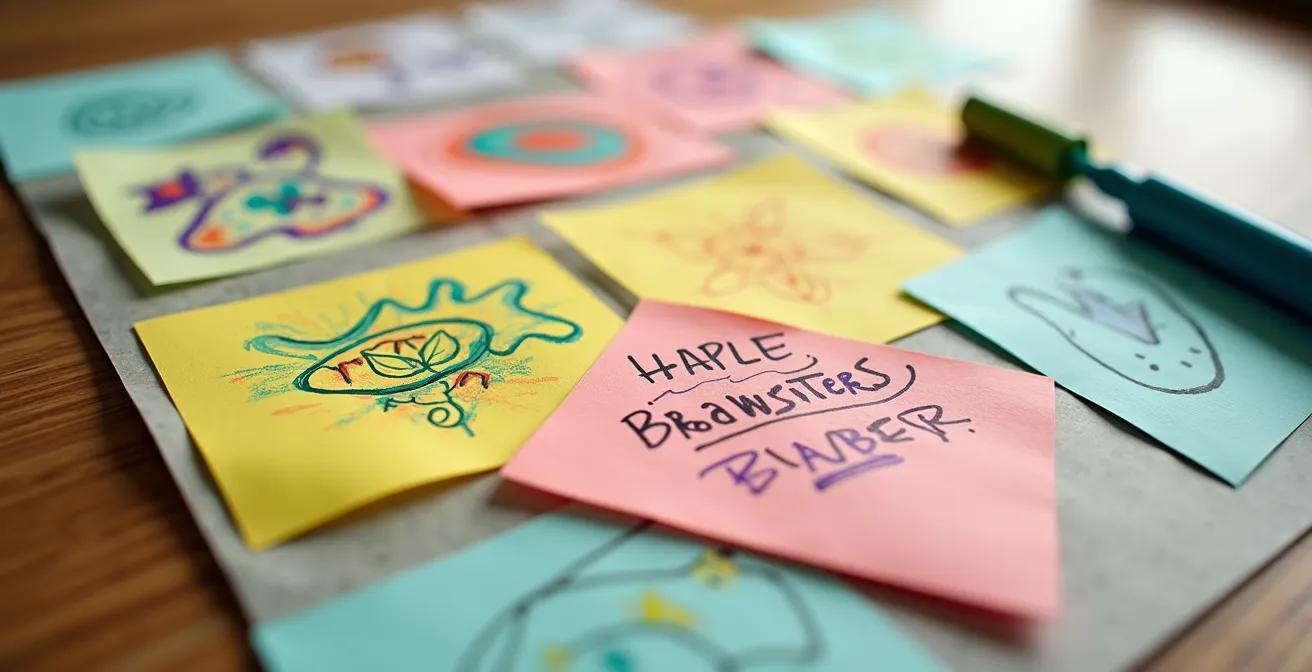
This shift towards authentic communication can be visualized as moving from polished corporate PDFs to the more textural, personal feel of handwritten notes and direct messages. It’s less about perfect grammar and more about clear, empathetic expression. For Gen Z, trust is built through this perceived authenticity. They value transparency about processes, honesty about limitations, and a willingness to engage in a two-way dialogue rather than a one-way broadcast.
Understanding these nuances is key to building relationships across different age groups. While Gen Z prefers a more casual approach, other generations have different expectations, as a comparative analysis of communication styles reveals.
| Generation | Preferred Tone | Key Characteristics | What to Avoid |
|---|---|---|---|
| Baby Boomers | Formal | Professional language, structured communication | Excessive informality, emoji overuse |
| Gen X | Direct & Efficient | Clear, concise, results-focused | Unnecessary fluff, overly casual |
| Millennials | Casual Professional | Authentic, open, collaborative | Overly formal, hierarchical tone |
| Gen Z | Authentic & Conversational | Visual-first, instant, transparent | Corporate jargon, forced trendiness |
The Frequency Error That Turns Your Helpful Emails Into Spam
In the quest to stay top-of-mind, many CRM strategies fall into the “frequency error.” This is the mistaken belief that more communication equals a stronger relationship. In reality, unsolicited or irrelevant messages are the fastest way to turn helpful outreach into spam, accumulating significant relationship debt. The problem isn’t the channel (email); it’s the lack of a meaningful trigger. When your automation sends a “just checking in” email based on a time delay rather than a customer action, you are creating noise, not a human signal.
A humanized approach to frequency is not about a fixed cadence, but about relevance and context. Instead of a 7-day automated follow-up, a true human signal is an email triggered by a meaningful customer behavior. For example:
- The customer visits the pricing page for the third time in a week. Trigger an email from a “sales advisor” offering to clarify the different tiers.
- The customer reads three blog posts on a specific topic. Trigger an email sharing a new, advanced guide on that same topic.
- The customer’s usage of a key feature drops. Trigger a supportive email asking if they need help or if something has changed in their workflow.
These messages feel helpful, not intrusive, because they are a direct response to the customer’s demonstrated interests or needs. They prove you are paying attention to them as an individual, not just as an entry in a marketing sequence.
The goal is to shift your mindset from “time-based sending” to “behavior-based conversation.” Every message should have a clear “why now?” that is obvious and valuable to the customer. This respects their time and attention, making them far more likely to open and engage with your communications. By aligning frequency with relevance, you transform your automated emails from potential spam into anticipated and valued micro-interactions that strengthen the relationship.
How to Use Chatbots to Answer Instantly Without Losing Empathy?
Chatbots are often seen as the antithesis of human connection, a necessary evil for managing support volume. However, when designed with intention, they can become a powerful tool for delivering instant, empathetic help, acting as a crucial first line of humanized interaction. The key is to abandon the goal of tricking users into thinking the bot is human. Instead, focus on creating a bot that is transparently helpful, respectful, and capable of demonstrating contextual empathy.
A non-empathetic bot provides generic, keyword-based answers. An empathetic bot, by contrast, is designed to understand and acknowledge the user’s emotional state. This can be achieved through thoughtful design:
- Acknowledge Frustration: If a user types “this isn’t working” or uses negative language, the bot’s first response should be one of acknowledgement, like, “I’m sorry to hear you’re running into trouble. I’ll do my best to help you sort this out quickly.”
- Set Clear Expectations: The bot should be upfront about its capabilities. A good opening is, “Hi, I’m the automated assistant. I can help with X, Y, and Z. If I get stuck, I’ll connect you with a human colleague right away.” This transparency builds trust.
- Offer Proactive Shortcuts: Based on the user’s page or logged-in data, the bot can proactively offer relevant solutions. For a user on the billing page, the bot can ask, “Are you here to update your payment method or download an invoice?” This shows it understands context.
The chatbot’s role isn’t to replace humans, but to handle immediate needs efficiently and escalate complex or emotional issues seamlessly. The handover process itself is a critical micro-interaction. A bad handover feels like being transferred to a new department where you have to repeat everything. A good handover involves the bot summarizing the issue and providing the human agent with the full chat transcript, so the customer can pick up the conversation exactly where they left off.
By designing your chatbot to be an empathetic and efficient assistant rather than a robotic gatekeeper, you provide immediate value while reinforcing the message that you respect the customer’s time and are committed to resolving their issue, whether through automation or a human expert.
Chatbot vs Human Support: Which Builds Better Long-Term Loyalty?
The debate between chatbot efficiency and human support often presents a false choice. The question isn’t which one is better, but how they should work together to build long-term loyalty. Relying exclusively on chatbots for all interactions creates a support experience that is fast but shallow, eroding loyalty over time. Conversely, relying only on human support is often financially unsustainable and can lead to slow response times for simple queries. The optimal strategy lies in a blended approach that leverages each for its core strength.
Chatbots are masters of transactional, low-emotion queries. They excel at answering questions like “What are your business hours?” or “Where is my order?” Using a bot for these tasks provides the instant gratification customers crave and frees up human agents to handle more complex, high-emotion issues. This is where true loyalty is forged. A customer with a simple question wants speed. A customer with a complex, frustrating problem needs empathy, creativity, and reassurance—qualities that only a human can provide.
When a human agent resolves a difficult situation with grace and understanding, they create a powerful emotional connection. This “hero moment” can turn a frustrated customer into a passionate advocate for the brand. The positive memory of that interaction will far outweigh any negative feelings about the initial problem. Long-term loyalty isn’t built on a foundation of flawless product performance; it’s built on the trust that when things inevitably go wrong, a capable and caring human will be there to help.
Therefore, chatbots build short-term satisfaction through speed, but human support builds long-term loyalty through connection. A smart CRM strategy uses chatbots to filter and resolve the simple issues instantly, while ensuring that complex or emotionally charged conversations are seamlessly routed to a human agent. This hybrid model respects the customer’s time for simple needs and invests in the relationship for complex ones, creating a support ecosystem that is both efficient and deeply human.
How to Respond to Detractors to Win Them Back Within 24 Hours?
How you respond to a negative review or a public complaint is one of the most visible and high-stakes micro-interactions in the entire customer lifecycle. A detractor isn’t just a lost customer; they are an active, vocal force that can influence the purchasing decisions of others. However, a fast, empathetic, and effective response can not only neutralize the negative sentiment but also turn that detractor into a loyal advocate. This is your chance to publicly demonstrate your company’s values and commitment to customer satisfaction.
The first 24 hours are critical. Your response must follow a clear framework based on accountability and resolution.
- Respond Quickly and Publicly: Acknowledge the complaint on the same public channel where it was made. This shows other customers that you are listening and not hiding from criticism. Your initial response should be brief, empathetic, and move the conversation to a private channel. Example: “Hi [Name], thank you for bringing this to our attention. We’re very sorry to hear about your experience. That’s not the standard we aim for. I’m going to send you a direct message right now to get the details and make this right.”
- Investigate and Empathize Privately: In the private channel (email, DM), start by validating their feelings. “I’ve read your feedback and I can completely understand why you’re frustrated.” Then, ask for the specific details needed to investigate the root cause. Avoid being defensive. Your goal is to understand, not to argue.
- Take Ownership and Offer a Solution: Once you understand the issue, take ownership. Even if it was a misunderstanding, apologize for the frustration it caused. Then, offer a clear, concrete solution. This could be a full refund, a replacement product, a service credit, or a detailed explanation of how you’re fixing the underlying process to prevent it from happening again. The solution should be more than fair; it should feel generous.
- Follow Up: After the solution has been delivered, follow up one last time to ensure they are satisfied. This final step closes the loop and reinforces your commitment.
This process transforms a public relations crisis into a loyalty-building opportunity. The detractor feels heard and respected, and onlookers see a brand that takes accountability seriously. Winning back a detractor is the ultimate proof of a human-centric culture and one of the most powerful ways to build a resilient, trusted brand.
Key Takeaways
- Impersonal automation creates “relationship debt” that directly leads to customer churn.
- Strategic micro-interactions, like personal videos and adaptive tone, are scalable ways to build genuine connection.
- True humanization is about demonstrating contextual empathy—proving you understand a customer’s specific situation.
How Lasting CRM Relationships Reduce Acquisition Costs by 40% for UK SaaS?
For a SaaS business operating in the highly competitive UK market, customer acquisition is an expensive battle. The real path to sustainable growth isn’t just acquiring more customers; it’s keeping the ones you have for longer and at a higher value. Every human-centric strategy we’ve discussed—from personal video messages to empathetic support—is not just a “nice-to-have.” It is a direct lever for improving your unit economics, most notably the crucial LTV:CAC (Lifetime Value to Customer Acquisition Cost) ratio.
The logic is simple but profound. A lasting relationship, built on trust and a sense of being valued, directly reduces churn. When you lower your churn rate, the average lifetime value of your customer automatically increases. A customer who stays for 36 months instead of 24 is significantly more valuable. This higher LTV means you can afford to spend more to acquire a customer, or you can maintain your CAC and dramatically increase profitability. The 40% reduction in acquisition costs isn’t about spending less on marketing; it’s about the powerful financial impact of retention. It’s cheaper to keep a happy customer than to acquire a new one.
Furthermore, loyal customers who feel a human connection to your brand become your most effective marketing channel. They refer new customers through word-of-mouth, leave positive reviews, and are more likely to participate in case studies. This organic growth generates new leads at a near-zero acquisition cost, further boosting your overall financial efficiency. In the UK SaaS space, where competitors are vying for the same eyeballs with escalating ad spends, this organic advocacy is a powerful competitive moat.
Therefore, investing in humanizing your CRM is not an expense; it is one of the highest-ROI investments you can make. It directly combats churn, increases LTV, and fuels a cycle of low-cost, organic acquisition. By shifting your focus from purely transactional metrics to the health of your customer relationships, you are building a more resilient, profitable, and fundamentally more human business.
To put these strategies into practice, the next logical step is to audit your current CRM communication and identify the key moments where a human micro-interaction can replace an impersonal, automated one.