In summary:
- Focus on high-ROI “sensory staging”—influencing what buyers see, feel, and smell—over costly renovations.
- A freshly painted front door, depersonalised interiors, and a strategic neutral colour palette create immediate perceived value.
- Eliminating odours (don’t just mask them) and mastering “lighting choreography” can make a home feel bigger and better maintained.
- Fund your entire weekend project by selling unwanted items, turning clutter into cash for a significant return on investment.
In the competitive UK property market, having your home linger for months is a seller’s greatest frustration. You’ve likely heard the standard advice: declutter, give it a lick of paint, and tidy the garden. While these tips are valid, they are merely tasks on a list. They lack a cohesive strategy and often fail to create the one thing that secures a fast, high offer: an emotional connection with the buyer.
This approach treats your home like a checklist of chores rather than a product to be marketed. It overlooks the powerful psychological triggers that make a buyer feel instantly “at home” and willing to pay a premium. The common mistake is focusing on big, expensive changes when the real key to adding value quickly lies in much smaller, more strategic details.
But what if the secret to adding thousands to your asking price wasn’t about renovation, but about perception? The true lever is “sensory staging”—a fast-paced, aesthetic-driven method focused on creating an aspirational experience. It’s about crafting an environment that feels spacious, fresh, and full of potential. It’s about making a buyer fall in love not with your home, but with the life they can imagine living in it.
This guide will walk you through a high-impact, weekend-long plan to do exactly that. We will move beyond the basics and dive into the specific, high-ROI actions that manipulate light, colour, and even scent to transform your property’s perceived value in just 48 hours.
To navigate this expert guide, we’ve broken down the essential weekend tasks into a clear, actionable plan. Explore the key areas below to learn how small changes can deliver a significant financial return.
Summary: Your Weekend Plan to Boost Home Value
- Why a Painted Front Door Can Increase Viewing Requests by 20%?
- How to Depersonalize Your Home so Buyers Can Imagine Living There?
- Greige vs White: Which Neutral Shade Sells Houses Faster?
- The Smell Error That Subconsciously Lowers Offers
- How to Light a Dark Hallway to Make It Feel Spacious?
- How to Position Mirrors to Bounce Light Into Dark Corners?
- Donating vs Selling: Which Is the Most Ethical Way to Clear Out?
- Which Essential Home Renovations Add the Most Asset Valuation in the UK Market?
Why a Painted Front Door Can Increase Viewing Requests by 20%?
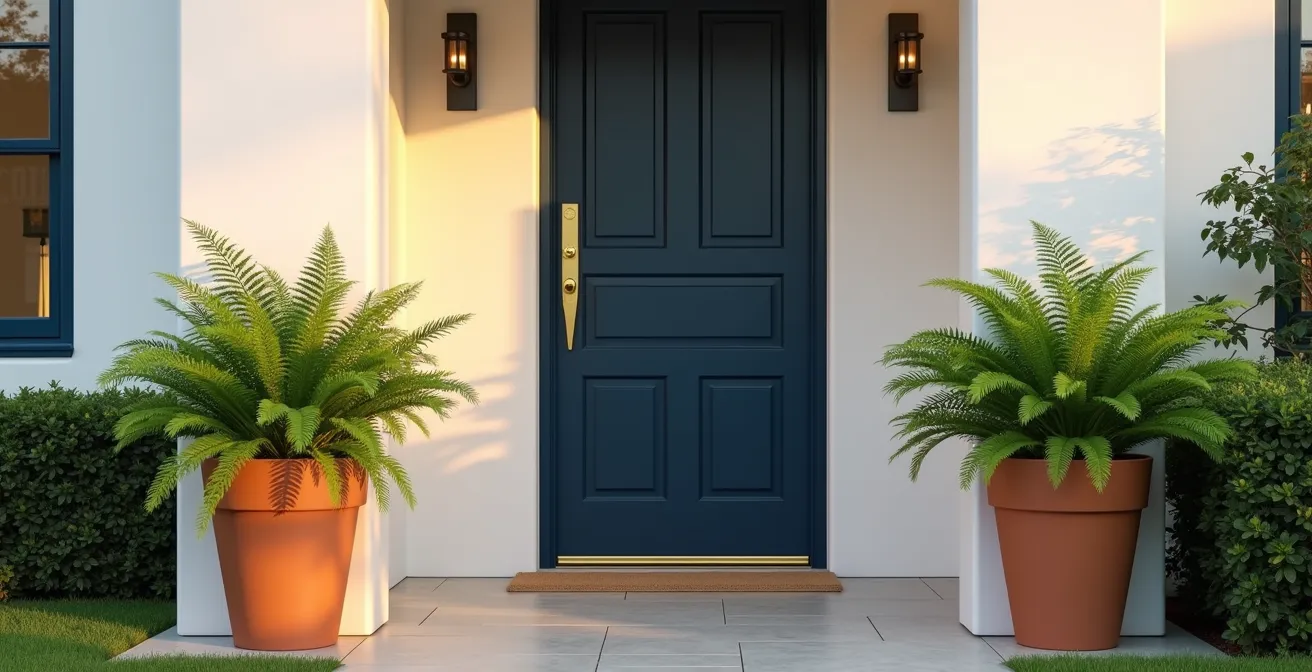
Your front door is the first physical interaction a buyer has with your property. It sets the tone for the entire viewing and is a powerful indicator of the home’s overall maintenance. A tired, peeling, or dated door suggests neglect, planting a seed of doubt before they even step inside. Conversely, a fresh, bold, and well-presented entrance creates an immediate impression of quality and care, a concept known as “kerb appeal psychology.”
This isn’t just a theory; it has a quantifiable financial impact. While a UK-specific figure can vary, a landmark US study by Zillow provided compelling evidence. The research found that homes with charcoal or jet black doors sell for over £5,000 more than expected. This is because these colours signal seriousness, security, and a timeless elegance that appeals to a broad range of buyers. The cost of a tin of paint and new hardware is minimal compared to this significant uplift in perceived value.
To execute this high-ROI task in a single afternoon, follow a simple but comprehensive plan. It’s not just about the paint; it’s about creating a complete “welcome” vignette.
- Preparation is Key: Pressure wash the entire entrance area to remove dirt and cobwebs. Lightly sand the door for a smooth finish.
- Choose a Winning Colour: Opt for a bold, sophisticated shade that coordinates with your home’s exterior. Navy blue, jet black, or dark charcoal are proven winners that photograph well and convey luxury.
- Update the Hardware: Replace old, tarnished handles, letterboxes, and knockers with modern fixtures in brushed nickel or matte black for a contemporary finish.
- Frame the Entrance: Add two matching planters on either side of the door. Fill them with robust evergreens like boxwood or seasonal flowers for a touch of life and colour.
- Final Details: Install new, clean house numbers in a contemporary font and place a new, high-quality doormat at the entrance. Ensure any exterior lighting is clean and fitted with a working bulb.
This isn’t just painting a door; it’s curating a first impression. It tells buyers that this is a home that has been loved and looked after, making them excited to see what’s inside.
How to Depersonalize Your Home so Buyers Can Imagine Living There?
One of the most common staging mistakes is leaving too much of *your* life on display. While family photos, personal collections, and bold decor choices make a house your home, they are significant barriers for potential buyers. When a viewer is confronted with your personal story, it makes it incredibly difficult for them to project their own future onto the space. The goal is to create an “emotional blank slate”—a serene, welcoming, and neutral environment.
The effectiveness of this strategy is well-documented. A report from the US-based National Association of Realtors reveals that for 83% of buyers’ agents, staging made it easier for their clients to visualize a property as their future home. Depersonalisation is the foundational step of all successful staging. It’s not about making a home sterile; it’s about shifting the narrative from “your home” to “their potential home.”
Case Study: The 12-Hour Sale Transformation
A professional stager was hired for a cluttered family home that had been on the market for four months without a single offer. By applying a systematic depersonalisation strategy—removing 97% of personal items and adding back just 3% of neutral accessories—the property was transformed. Family photos were replaced with abstract art, extensive collections were swapped for single statement pieces, and crowded surfaces were cleared. The home sold within 12 hours of being re-listed, for over the asking price, because buyers could finally “mentally move in.”
Creating this “neutral storytelling” is a weekend task. Systematically pack away personal photographs, children’s drawings, and any distinct collections or memorabilia. Replace them with a few carefully chosen, impersonal items: a piece of abstract art, a sculptural vase, or a stack of neutral coffee table books. The aim is to suggest a sophisticated lifestyle without defining it too narrowly.
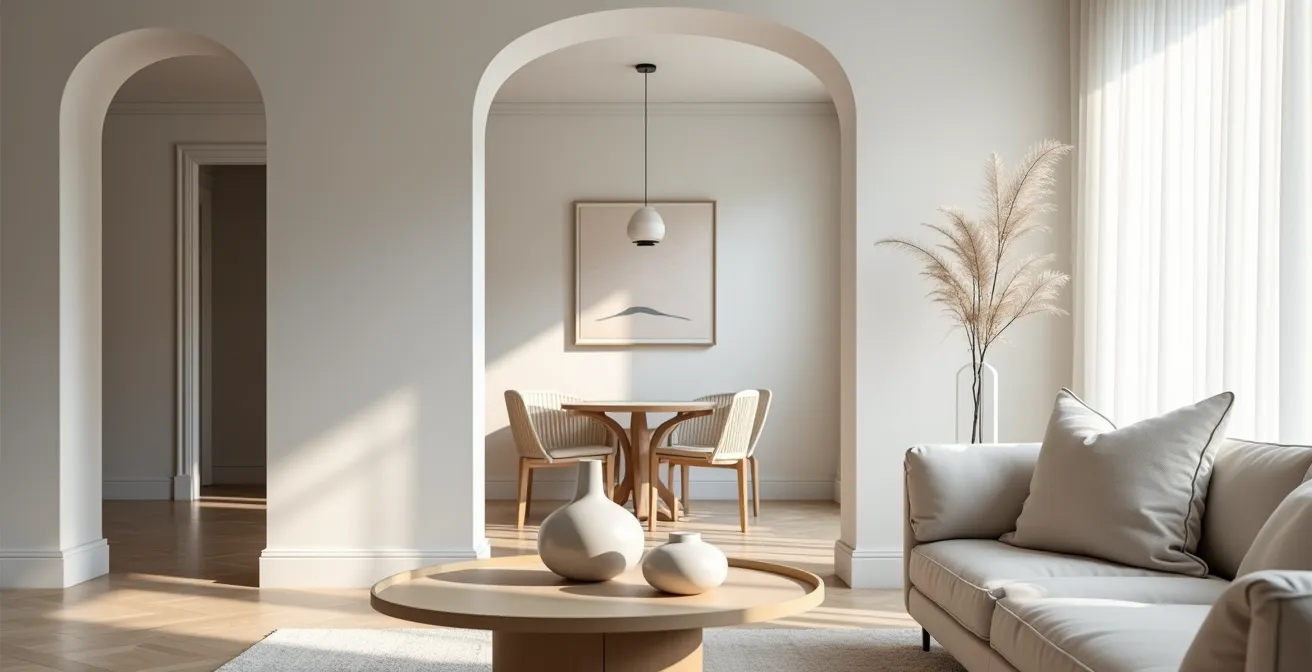
As you can see in a well-staged space, the furniture provides structure, but the decor is minimal and strategic. The pathways are clear, the surfaces are clean, and the overall feeling is one of calm potential. This allows a buyer’s imagination to fill in the blanks with their own belongings and aspirations, a crucial step in the journey towards making an offer.
Greige vs White: Which Neutral Shade Sells Houses Faster?
The advice to “paint in neutral colours” is ubiquitous, but it lacks the strategic nuance needed to maximize value. The specific shade you choose has a dramatic effect on how a room feels and photographs. As experts from Lightmen Painting Professionals note in their guide, “Colour creates instant impressions. A calming, neutral space feels move-in ready, while bold or outdated colours trigger thoughts of ‘extra work’.” The choice isn’t just aesthetic; it’s a financial decision.
The two main contenders in the neutral world are pure white and “greige”—a sophisticated blend of grey and beige. While both are vast improvements over bold colours, they perform differently. White can create a clean, modern look but risks feeling clinical or cold, and it can be harsh in photographs, causing “blown-out” highlights that hide a room’s details. Greige, on the other hand, offers the perfect balance. It absorbs light softly, creating depth and a warm, welcoming atmosphere that feels like a boutique hotel.
This subtle difference translates into faster sales and better offers. Buyers perceive greige spaces as more sophisticated and, crucially, more “finished.” This psychological comfort is invaluable. To make the right choice for your weekend paint job, consider how each performs across key metrics.
The following comparison table breaks down the strategic advantages of each choice, helping you decide where to apply each for maximum impact. As this analysis of paint’s effect on home value shows, the right shade is a powerful tool.
| Aspect | Greige (Gray-Beige Blend) | Pure White |
|---|---|---|
| Selling Speed | 30% faster than bold colours | 25% faster than bold colours |
| Photography Appeal | Absorbs light softly, creates depth | Can cause blown-out highlights |
| Perceived Temperature | Warm and welcoming | Can feel clinical or cold |
| Popular Shades | SW Agreeable Gray, BM Revere Pewter | SW Pure White, BM White Dove |
| Best Rooms | Living rooms, bedrooms | Kitchens, bathrooms, trim |
| Market Appeal | Boutique hotel aesthetic | Clean, modern look |
For your weekend project, the strategy is clear. Use a warm, inviting greige for main living areas and bedrooms to create a cosy, expensive feel. Reserve brilliant white for kitchens, bathrooms, and trim to emphasize cleanliness and create crisp, defining lines. This two-tone approach provides the best of both worlds, making your entire home feel cohesive and move-in ready.
The Smell Error That Subconsciously Lowers Offers
Of all the senses, smell is the most powerfully linked to memory and emotion. A buyer’s first impression of your home’s scent begins the moment they walk through the door, and it can subconsciously make or break a sale. The most common and critical error sellers make is attempting to *mask* odours with strong air fresheners, plug-ins, or scented candles. This is a major red flag for buyers.
A study on the psychology of home scents revealed a counter-intuitive truth: overpowering fragrances don’t create a welcoming atmosphere. Instead, they trigger suspicion, leading buyers to wonder what problems are being hidden—damp, pets, or poor ventilation. The research showed that homes which focused on eliminating odours to achieve a “clean neutral” sold 15% faster. The ideal scent for selling a home is no discernible scent at all, beyond a faint hint of cleanliness and fresh air. This signals to a buyer that the home is well-maintained and healthy.
Achieving this state of “scent neutrality” is a crucial weekend task. It requires a systematic deep clean rather than a quick spray. This is about removing the source of odours, not covering them up.
Your Weekend Deodorising Action Plan
- Tackle Kitchen Grease: Clean all extractor fan filters with a strong degreasing solution to eliminate stale cooking smells.
- Neutralise Drains: Pour a mixture of baking soda and white vinegar down all kitchen and bathroom drains. Let it sit for 30 minutes before flushing with hot water.
- Deep-Air Textiles: All soft furnishings (curtains, rugs, cushions) absorb odours. Hang them outside for a few hours if possible, or use a fabric-safe deodorising spray.
- Clean Pet Areas: Wash all pet bedding and thoroughly clean any pet-related areas with an enzyme cleaner, which breaks down odour-causing bacteria.
- Ventilate Aggressively: Open all windows on opposite sides of the house for at least four hours to create a strong cross-breeze and completely refresh the air.
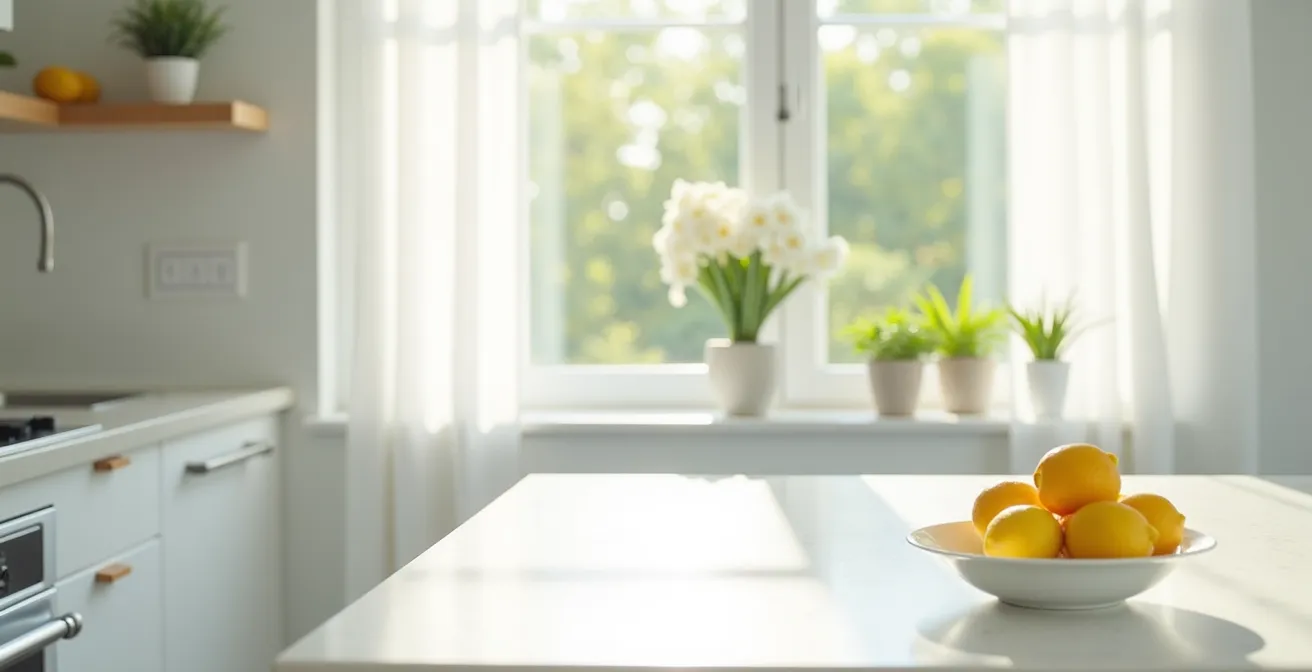
Only after you have thoroughly neutralised every source of odour should you consider adding a subtle, natural scent. A bowl of fresh lemons on the kitchen counter or a few drops of vanilla extract on a new, clean HVAC filter are more than enough. The goal is a subliminal hint of freshness, not an announcement.
How to Light a Dark Hallway to Make It Feel Spacious?
Hallways, landings, and corridors are often the most overlooked spaces in a home, yet they are critical arteries that connect every room. A dark, narrow hallway can make an entire property feel cramped and unwelcoming. The solution is strategic “lighting choreography”—using multiple layers of light to create an illusion of space, warmth, and height. This is far more effective than relying on a single, harsh overhead bulb.
Getting the brightness right is part science, part art. As a rule of thumb, staging experts recommend a ratio of 100 watts for every 50 square feet of space to ensure a room feels adequately lit and inviting for viewings. For a typical hallway, this means you’ll need more than just one fixture. The key is to layer different types of light to perform different jobs: ambient, task, and accent.
This layered approach can transform a gloomy corridor into a bright, inviting passage. Your weekend plan should incorporate these three essential layers to make the space feel both functional and stylish.
- Layer 1: Ambient Light. This is your primary, overall illumination. Replace any dated “boob” lights with a modern ceiling fixture or, for long hallways, a track lighting system. This distributes light evenly along the length of the space.
- Layer 2: Task Light. If you have a console table, add a small, elegant table lamp. This creates a warm, welcoming pool of light and adds a decorative touch, making the hallway feel more like a “room.”
- Layer 3: Accent Light. This is the secret weapon for adding depth. Position an uplighter behind a tall, slim plant in a corner or use a small, discreet spotlight to highlight a piece of art on the wall. This draws the eye and creates visual interest.
When selecting bulbs, aim for a warm, welcoming colour temperature between 3000K and 3500K. This range mimics natural daylight and makes spaces feel cosy. Avoid cold, blue-toned light (over 4000K), which can feel clinical, or overly yellow light (under 2700K), which can make spaces look dated. A simple LED strip placed under a console table is another cheap but highly effective hack to add a modern, floating effect.
How to Position Mirrors to Bounce Light Into Dark Corners?
Mirrors are the home stager’s best friend. They are a uniquely powerful tool for manipulating perception, capable of making small rooms feel larger, dark corners feel brighter, and narrow spaces feel wider. However, their placement must be strategic. As one professional from the Home Staging Institute wisely puts it, “A mirror must always reflect something beautiful. A mirror reflecting a blank wall just doubles the emptiness.”
The golden rule of mirror placement is to position them to reflect a light source or an attractive feature. This could be a window to bounce natural light deep into a room, or it could be a beautiful piece of art or a view of the garden. By doing so, you not only amplify light but also create a new “view” within the room, adding depth and interest. Strategic mirror placement can increase the perceived size of a room by up to 40%, a dramatic transformation for a relatively small investment.
Don’t just hang a single mirror and hope for the best. Different spaces and problems call for different mirror strategies. A well-placed mirror is an instant problem-solver.
This table outlines several high-impact mirror placement strategies you can implement this weekend. Each is designed to solve a common spatial problem and add significant perceived value, as detailed in many home staging guides.
| Location | Mirror Type | Effect | Cost Range |
|---|---|---|---|
| End of a Hallway | Full-length floor mirror | Doubles the perceived length | £50-£150 |
| Opposite a Window | Large wall mirror | Maximizes and reflects natural light | £75-£200 |
| In a Dark Corner | Gallery of small, varied mirrors | Creates an artistic focal point | £40-£100 |
| Behind a Lamp | Round decorative mirror | Amplifies artificial light at night | £30-£80 |
| On a Long Wall in a Narrow Room | Wide horizontal mirror | Visually widens the space | £60-£120 |
For your weekend project, identify the darkest corner or narrowest space in your home. Use a large floor-length mirror at the end of a hallway to create a powerful illusion of depth. In a living room, place a large mirror on the wall opposite the main window to effectively double your natural light. This simple addition is one of the quickest and most effective ways to make your home feel brighter, bigger, and more expensive.
Donating vs Selling: Which Is the Most Ethical Way to Clear Out?
Depersonalising and decluttering are essential, but what do you do with the items you remove? The choice between selling and donating isn’t just a practical one; it’s also a chance to be strategic. A “conscious decluttering” approach allows you to clear out your space ethically while potentially funding your entire home staging project. The goal is to see your unwanted items not as junk, but as assets.
The most ethical path involves a tiered strategy. First, identify high-value items that can be sold quickly. Furniture, electronics, and quality decor can find a new home via platforms like Facebook Marketplace or Vinted, putting cash directly in your pocket for paint, plants, and hardware. For items that don’t sell, donation is the next best step. Research local charities that have a specific need—furniture banks for larger pieces, or shelters that need good-quality household goods. Remember, only donate items in good, usable condition; broken or dirty items become a burden for charities to dispose of.
Case Study: The Declutter-for-Profit Staging Project
One homeowner took this strategy to heart and funded their entire weekend staging project by selling unused furniture and decor online. They raised a total of £275 by selling an old armchair (£75), vintage lamps (£50), excess cushions (£30), and a small collection (£120). This cash covered the cost of new paint (£80), updated door hardware (£45), fresh plants (£35), and professional cleaning supplies (£40), with £75 left over. Their small investment of time paid off spectacularly: the home sold in just three days for £8,000 over the asking price.
To replicate this success, adopt a structured approach in the week before your main staging weekend:
- Sort and Categorise: Create three distinct piles—Sell, Donate, and Upcycle. Be realistic about what has market value.
- Price to Sell: For your “Sell” pile, price items for a quick sale. Your goal is to generate cash fast, not to get the maximum possible price. Aim to raise £100-£300.
- Donate with Purpose: Use peer-to-peer apps like Olio for fast local donations of smaller items. For larger pieces, call charities beforehand to ensure they can accept your donation.
- Get Creative with Upcycling: Before you throw anything away, consider if it can be transformed. An old side table can become a chic feature with a coat of chalk paint; an old ladder can be a rustic towel rack in the bathroom.
This process transforms decluttering from a chore into a strategic financial move. It’s the ultimate quick win, clearing your space for buyers while providing the budget to make it shine.
Key takeaways
- First Impressions are Financial: A freshly painted front door and updated hardware is a minimal-cost, maximum-impact project that can add thousands to your home’s perceived value.
- Create an “Emotional Blank Slate”: Depersonalise by removing personal photos and collections. Allow buyers to imagine their own life in the space, not yours.
- Master “Sensory Staging”: The best-selling homes appeal to all senses. Focus on warm, neutral colours (like greige), eliminating odours, and creating bright, well-lit spaces.
Which Essential Home Renovations Add the Most Asset Valuation in the UK Market?
While the focus of a weekend project should be on high-impact, low-cost staging, it’s crucial to understand where these efforts fit into the broader picture of home valuation. Full-scale renovations of kitchens and bathrooms traditionally add the most value, but they are expensive and time-consuming. The genius of the “weekend refresh” is that it mimics the *effect* of a renovation for a fraction of the cost, delivering an astonishing return on investment (ROI).
The data supports this “refresh over renovate” strategy for sellers needing a quick sale. Studies consistently show that staging and cosmetic updates yield significant returns. For example, a major profile on home staging found that 29% of agents reported a 1-10% increase in the offer price for staged homes compared to similar unstaged homes. On a £300,000 property, that’s a potential uplift of £3,000 to £30,000 from strategic presentation alone.
The key is to target the areas that buyers scrutinize the most—kitchens, bathrooms, and living areas—with smart, cosmetic updates. Repainting kitchen cupboards is far cheaper than replacing them, but it can completely transform the feel of the space. Similarly, re-grouting bathroom tiles and adding a modern glass shower screen gives the impression of a new bathroom without the £5,000 price tag.

To put this into perspective, here is a breakdown of typical weekend refreshes, their approximate costs, and their incredible potential ROI. This analysis of staging’s ROI highlights where your weekend efforts will be most rewarded.
| Area | Weekend Refresh | Cost | Perceived Value Added | ROI |
|---|---|---|---|---|
| Living Areas | Fresh paint in neutral tones | £150 | £2,000 | 1233% |
| Front Door | Paint & new hardware | £100 | £1,200 | 1100% |
| Kitchen | Repaint cupboards & change handles | £150 | £1,500 | 900% |
| Bathroom | Re-grout & install glass shower screen | £200 | £1,000 | 400% |
| Energy Efficiency | Smart thermostat & LED bulbs | £250 | £800 | 220% |
As the table clearly shows, a fresh coat of neutral paint offers the highest return, reinforcing its importance as a primary weekend task. These figures demonstrate that you don’t need a huge budget to see a huge return. Strategic, well-executed cosmetic updates are the fastest and most effective way to boost your home’s value before it hits the market.
By investing one weekend and a few hundred pounds into these targeted, high-ROI tasks, you are not just cleaning your house—you are professionally marketing it. You are creating a product that appeals directly to buyer psychology, making your home the one they remember, desire, and are willing to pay a premium for.