
Your energy bills climbed again last quarter. The radiators blast heat in rooms nobody uses. The kitchen feels stuffy while the living room stays cold. Sound familiar? These frustrations push thousands of UK homeowners toward smart appliances every year—but the marketing noise makes it hard to separate genuine solutions from expensive gimmicks. Having advised homeowners across the Midlands on appliance upgrades, I consistently see the same pattern: people buy smart devices expecting miracles, then feel disappointed when reality doesn’t match the brochure. The truth sits somewhere more useful—smart appliances genuinely improve comfort and cut costs, but only when you understand what they actually do and where they deliver real value.
- Genuine ‘smart’ means sensing, learning, and automating—not just app control
- Climate control delivers the biggest impact: expect around 8% savings on heating and cooling
- Kitchen and laundry appliances offer quieter wins through waste reduction
- Allow 2-3 months for proper optimisation before judging results
- Your home’s insulation matters more than any smart device
What actually makes home appliances ‘smart’—beyond the marketing?
Let me be direct: slapping Wi-Fi connectivity on a toaster does not make it smart. The term gets thrown around so loosely that it’s nearly meaningless. Statista market forecast data shows UK smart home penetration will reach 87.8% in 2025—but that figure includes everything from voice assistants to connected doorbells. Not all of these actually improve your daily life or lower your bills.
What separates genuinely smart appliances from glorified remote controls? Three capabilities. First, sensing: the device monitors conditions like temperature, humidity, occupancy, or load weight. Second, learning: it recognises patterns in how you live and adjusts accordingly. Third, automating: it acts without you lifting a finger, based on what it knows. An appliance that does all three? That’s smart. One that just lets you turn it on from your phone? That’s remote control with extra steps.
Here’s my honest take: most households only need smart technology in two or three appliance categories. The industry wants you buying connected everything—connected kettles, connected coffee machines, connected pet feeders. Some people love that ecosystem approach. But if your goal is comfort and efficiency, focus on the categories that genuinely move the needle. Skip the rest until you’re curious. If you want a broader view of what’s available, exploring smart home gadgets beyond major appliances can help you see the full landscape.
The three-question test for ‘genuinely smart’: Before buying, ask yourself: Does it sense something useful? Does it learn from my habits? Does it act automatically? If you’re answering ‘no’ to two of these, you’re paying for connectivity theatre.
Climate control: where smart technology delivers the biggest impact
8%
Average savings on heating and cooling bills with smart thermostats
According to ENERGY STAR certification standards, smart thermostats save approximately 8% on heating and cooling costs—around £50 annually for a typical household. That sounds modest until you realise it’s achieved passively, year after year, with virtually no effort after initial setup. The real figure varies based on your home’s insulation, local climate, and how erratically you used your old thermostat.
I always recommend starting with climate control. It’s visible, it’s tangible, and it affects every room. Quality manufacturers like Westpoint design air conditioning and refrigeration systems with smart integration in mind, allowing precise temperature management across zones. The ability to cool your bedroom before you arrive home, or reduce output when nobody’s there, transforms both comfort and efficiency.
But here’s what I see go wrong constantly. In my experience advising homeowners across the UK over the past few years, I consistently see people install smart thermostats expecting dramatic savings, only to find modest results because their homes leak heat through poor insulation. This observation is specific to UK properties and may vary based on your home’s construction—but the pattern holds. A smart thermostat managing a poorly insulated house is like fitting a precision fuel injector to a car with holes in the petrol tank.
Sarah’s kitchen upgrade: expectations versus reality
I advised Sarah, a marketing manager in her early forties, after she replaced her entire kitchen appliance suite with smart versions in a semi-detached house in Manchester. Her initial experience? Bills actually increased for the first two months. The smart features were poorly configured—running unnecessary cooling cycles, scheduling wash cycles at peak tariff times. After proper setup and learning optimal schedules, she achieved 23% reduction in kitchen energy use. The lesson: smart doesn’t mean automatic. You need a few weeks of adjustment.
Here’s the adaptation timeline I typically observe with clients transitioning to smart climate control:
-
Installation and initial learning—system gathering data on your routines -
Manual adjustments—you’re correcting the system’s assumptions -
Optimisation phase—system stabilises, you start forgetting it exists -
Steady state—automated operation with measurable benefits
Kitchen and laundry: the hidden efficiency opportunities
The most common mistake I encounter? Homeowners fixate entirely on heating while ignoring the appliances running twenty-four hours a day. Your refrigerator never switches off. Your washing machine runs multiple cycles weekly. These categories won’t deliver the headline savings of climate control, but they chip away at waste in ways that compound over time.
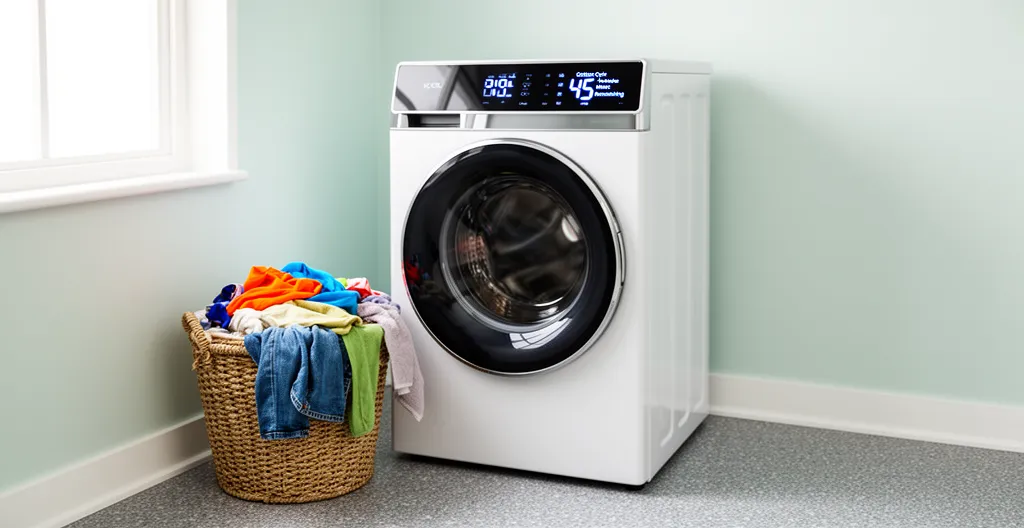
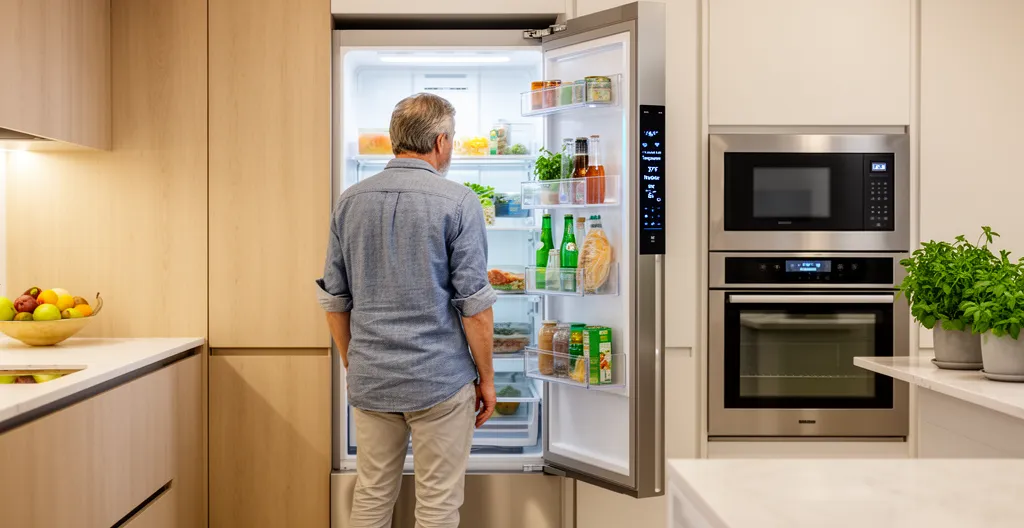
Smart refrigerators adjust internal temperature based on contents and door-opening frequency. Some models alert you when items approach expiry—genuinely useful if you regularly bin forgotten vegetables. Smart washing machines sense load weight and fabric type, adjusting water volume and cycle duration. The savings per cycle seem tiny. Over hundreds of cycles annually, they add up.
Worth the premium
-
Load sensing reduces water and energy waste per cycle
-
Delayed start exploits cheaper off-peak electricity tariffs
-
Maintenance alerts prevent costly breakdowns
Honest limitations
-
Higher purchase price versus conventional models
-
Connectivity features may become obsolete before appliance wears out
-
Requires reliable Wi-Fi throughout your home
My honest assessment: if your current refrigerator or washing machine still works fine, don’t rush to replace it for smart features alone. The energy efficiency gains from newer models matter more than the smart connectivity. When your appliance does need replacing, choosing a smart version makes sense—you’re getting the efficiency upgrade anyway, and the intelligence comes as a bonus.
Your questions about smart home appliances
How long before smart appliances pay for themselves?
Frankly, it varies enormously. Smart thermostats in a well-insulated home might pay back within two to three years. Smart refrigerators? Possibly never, if you’re comparing against a modern conventional model. Focus on payback for climate control; treat other categories as convenience investments.
Will smart appliances work with my existing systems?
Most smart thermostats work with standard UK heating systems, but combi boilers and heat pumps sometimes need specific compatibility. Check before purchasing. For appliances like refrigerators and washing machines, compatibility is rarely an issue—they plug in and connect to your home Wi-Fi independently.
Should I worry about data privacy with connected appliances?
A reasonable concern. These devices collect usage data—when you’re home, your temperature preferences, your laundry habits. Reputable manufacturers encrypt this data and allow you to control sharing settings. Read privacy policies before buying, and stick to established brands with clear data practices.
What happens when manufacturers stop supporting older devices?
This is the risk nobody discusses enough. Smart features rely on manufacturer servers and app updates. If support ends, your smart fridge becomes a regular fridge. Choose brands with strong track records and consider how essential the smart features really are to your decision.
Are smart appliances relevant if I’m renting?
Smart thermostats typically require landlord approval since they replace existing controls. However, UK Government consultation documents confirm that EPC reforms planned for 2026 will introduce smart readiness metrics—meaning landlords may increasingly install smart-enabled systems themselves. Portable smart devices like air quality monitors require no permission at all.
Your next step
Before buying any smart appliance
-
Check your home insulation—no smart device compensates for heat escaping through walls
-
Assess your current appliance ages—prioritise replacing items over ten years old
-
Confirm Wi-Fi coverage reaches the appliance location
-
Start with climate control—the returns are clearest there
-
Allow eight weeks before judging any smart appliance’s performance
Smart home technology works. Not magically, not instantly, but steadily—when matched to the right problems. The question isn’t whether these appliances transform comfort and efficiency. They do. The question is which ones transform your comfort and your efficiency, given your home, your habits, and your priorities.