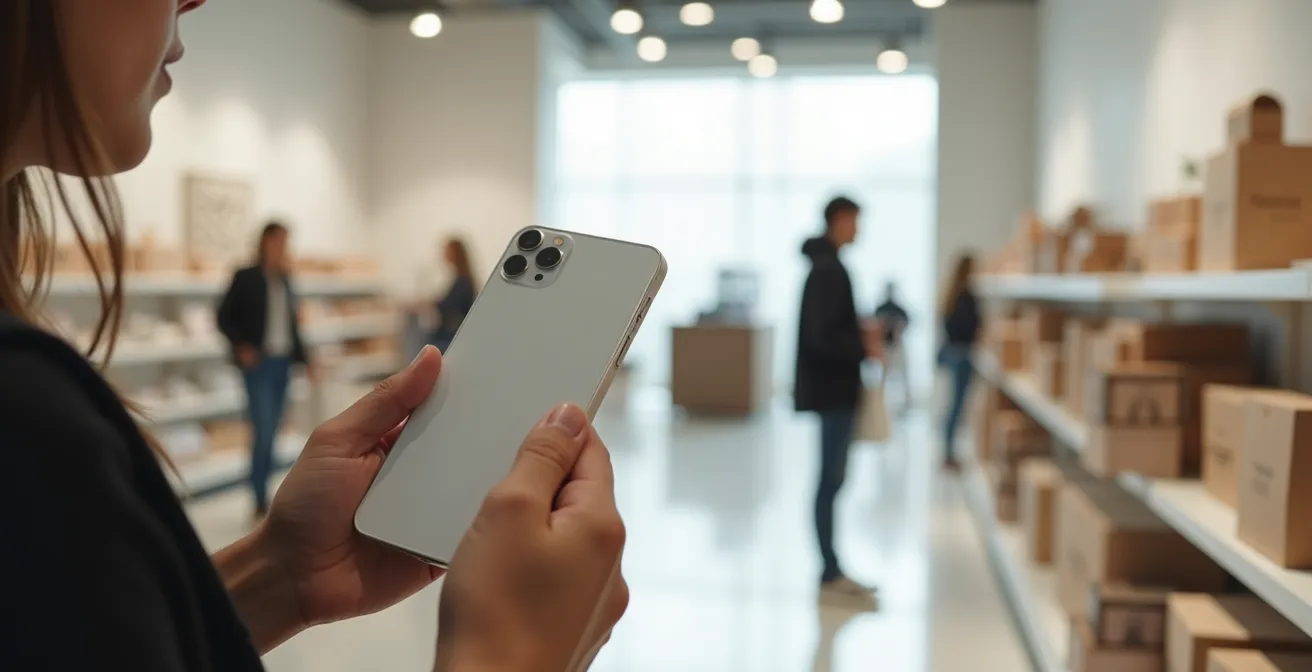
Cart abandonment in the UK isn’t just about high prices; it’s a direct result of “channel dissonance”—jarring inconsistencies that disrupt your customer’s journey and erode trust.
- A customer’s shopping cart that doesn’t sync between their phone and laptop is no longer a minor inconvenience; it’s a primary reason for them to leave.
- Disconnected physical store POS systems and online inventory create critical friction points that stop a sale dead in its tracks.
Recommendation: Implement a Single Customer View (SCV) to unify inventory, customer data, and brand voice, creating one seamless conversation across all touchpoints.
As a UK retail operations manager, the pattern is maddeningly familiar. You see healthy ‘add to cart’ numbers on your mobile analytics, a clear sign of customer interest. Yet, when you look at the final conversion data, the numbers plummet. It feels like pouring water into a leaky bucket, with potential revenue vanishing somewhere between a customer’s commute and their couch. The usual suspects are often blamed: high shipping costs, a complex checkout process, or unexpected fees. While these factors play a part, they are often just symptoms of a deeper, more systemic problem.
The real culprit is a phenomenon we can call channel dissonance. This is the cognitive friction a customer experiences when a brand’s promise breaks between devices, platforms, and the physical world. It’s the jarring moment when the app offers a discount the website doesn’t recognise, when the in-store staff has no record of an online purchase, or when the brand’s fun and friendly tone on Instagram turns into a cold, corporate voice in a confirmation email. Each point of dissonance is a small betrayal of trust that erodes the customer’s buying momentum until it evaporates completely.
But what if you could seal those leaks? This article moves beyond the generic advice. We will not just tell you to be “seamless”; we will dissect the eight most critical points of channel dissonance in the modern UK retail journey. From a disconnected POS system to a chatbot that lacks empathy, we will provide a diagnostic framework to help you identify and fix the specific inconsistencies that are costing you sales and loyalty.
This guide provides a structured approach to diagnosing and resolving the critical disconnects within your retail operations. Below, you will find a summary of the key areas we will explore, each designed to help you build a truly unified and resilient customer experience.
Summary: Fixing the Leaks in Your Omnichannel Strategy
- Why Customers Expect Their Cart to Sync Across Devices Instantly?
- How to Connect Your Physical Store POS With Your Online Store Inventory?
- App vs Mobile Web: Which Experience Drives Higher Conversion Rates?
- The Brand Voice Mistake That Confuses Customers on Social Media
- How to Make In-Store Returns for Online Purchases Painless?
- Why Your Staff Can’t See what The Customer Bought Online Yesterday?
- How to Use Chatbots to Answer Instantly Without Losing Empathy?
- How a Better Omnichannel Customer Experience Increases Loyalty Card Usage by 40%?
Why Customers Expect Their Cart to Sync Across Devices Instantly?
The modern customer journey is no longer linear; it’s a fragmented collection of micro-moments. A shopper might start their research on their mobile during their morning commute, adding items to their cart as a form of sophisticated wishlist. This initial interaction builds buying momentum. The shopping cart is no longer just a precursor to a sale; it’s a personal curation space, a tool for consideration. When that same customer sits down at their laptop in the evening, ready to finalise the purchase, an empty cart is more than an inconvenience. It’s a sign that the brand has forgotten the conversation they started hours ago.
This is a classic example of channel dissonance. The brand has failed to maintain a single, persistent identity for the customer across different touchpoints. This forces the customer to restart their work, effectively punishing them for engaging with the brand on multiple platforms. The frustration is immediate, and the carefully built momentum dissolves. This isn’t a niche problem affecting a handful of users; recent Salesforce Research data reveals that a staggering 77% of mobile shopping carts were abandoned in the UK in Q3 2024. A significant portion of this is attributable to disjointed cross-device experiences.
For UK retailers, understanding this behaviour is key. Many shoppers research first and purchase later, often on a different device entirely. A synced cart is not a luxury feature; it is a fundamental expectation. It signals to the customer that their time and intent are valued. Failing at this first hurdle is one of the fastest ways to lose a potential sale and communicate that your omnichannel strategy is merely a facade.
How to Connect Your Physical Store POS With Your Online Store Inventory?
The wall between online and offline retail has crumbled, yet many businesses still operate with a digital ghost in their machine: a Point of Sale (POS) system that is blind to the e-commerce warehouse, and vice versa. This disconnect is a primary source of channel dissonance, leading to frustrating customer experiences like seeing an item “in stock” online only to find the shelf empty at the local store. For an operations manager, this isn’t just a customer service issue; it’s a costly operational failure rooted in data silos.
Integrating your physical POS with your online inventory is the central nervous system of a true omnichannel strategy. A unified system transforms your business by enabling real-time inventory tracking across all channels. Every online sale immediately updates the stock levels available to in-store staff, and every in-store purchase reflects on the website. This single source of truth prevents stockouts, eliminates customer disappointment, and unlocks powerful new capabilities. As this image illustrates, the right technology empowers staff and creates a seamless flow of information.
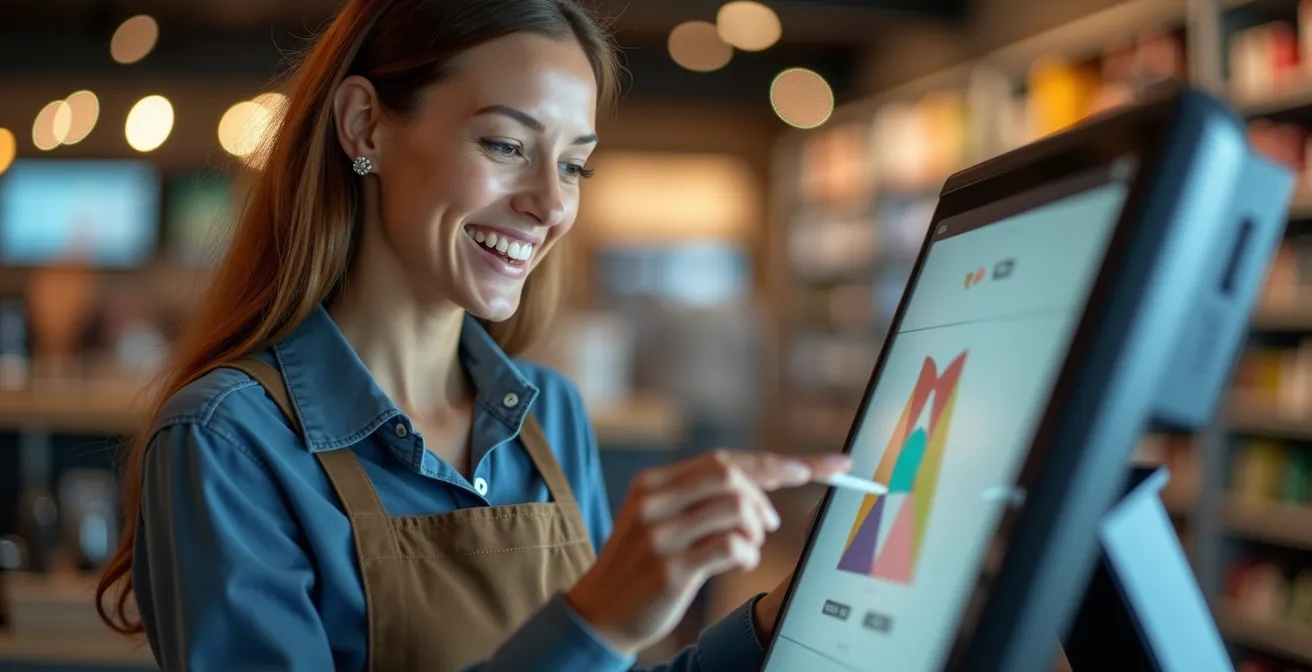
With an integrated system, you can turn your physical locations into mini-fulfillment centers. Enabling “Ship-from-Store” functionality allows you to leverage local inventory for faster, cheaper delivery, delighting customers and moving stock more efficiently. This transforms a cost center (your physical store) into a dynamic part of your logistics network. The key is to choose the right technology and implement it with a clear, step-by-step plan.
Action Plan: Integrating Your UK POS and E-commerce Platforms
- Assess Current Capabilities: Identify your existing POS system. UK retailers using modern platforms like Lightspeed, Epos Now, or Zettle often have built-in omnichannel features ready to be activated.
- Enable Real-Time Sync: Configure your system for automatic, real-time inventory updates after every single transaction, whether it happens online or in-store.
- Use Middleware for Legacy Systems: If you use an older POS, leverage middleware platforms like ConnectPOS to build a seamless integration bridge with major e-commerce backends like Shopify, WooCommerce, or BigCommerce.
- Automate Supplier Management: Set up automated reorder points within your unified system to proactively prevent stockouts of your best-selling items.
- Implement Ship-from-Store: Activate the functionality that allows your physical stores to fulfill online orders, turning them into strategic local distribution hubs.
App vs Mobile Web: Which Experience Drives Higher Conversion Rates?
As mobile traffic continues to dominate e-commerce, the question for every operations manager is no longer *if* they need a mobile presence, but *how* to best deliver it. The debate often centres on three core options: a responsive mobile website, a native application, or a Progressive Web App (PWA). Each has distinct implications for conversion rates, cart abandonment, and customer loyalty. Choosing the right path requires a clear understanding of their respective strengths and weaknesses, especially within the UK market.
A mobile website is the universal entry point—essential for discovery and reaching the widest audience. However, it often suffers from higher friction, requiring users to re-enter information. Native apps, on the other hand, offer the richest, most controlled experience. They can leverage device features like stored payment details (Apple/Google Pay) and, most importantly, push notifications. The power of this direct communication channel cannot be overstated; engagement data demonstrates that the average open rate for push notifications is 50%, dwarfing the 20% average for marketing emails.
Progressive Web Apps (PWAs) attempt to offer a middle ground, providing an app-like experience within a browser, but the data shows they still lag behind native apps in key performance metrics. For UK retailers focused on driving high-frequency purchases and building a loyal customer base, a native app consistently delivers superior results, as shown in the comparison below.
| Metric | Native Apps | Mobile Web | Progressive Web Apps (PWA) |
|---|---|---|---|
| Average Conversion Rate | 3.7% | 1.5% | 2.8% |
| Cart Abandonment Rate | 72% | 85.65% | 75% |
| Push Notification Open Rate | 50% | Not Available | 40% |
| Best Use Case | High-frequency purchases (groceries) | Research & discovery phase | Middle ground solution |
| UK Payment Integration | Apple Pay, Google Pay stored | Requires re-entry | Can save payment methods |
The Brand Voice Mistake That Confuses Customers on Social Media
In the omnichannel ecosystem, social media platforms are often the first handshake between a brand and a potential customer. A playful TikTok video, an inspiring Instagram post, or a witty tweet can create an instant connection. The danger arises in the journey from that social post to the checkout page. The most common mistake UK retailers make is “context collapse”—a sudden and jarring shift in brand voice, tone, or even offer between the social platform and the e-commerce site. This inconsistency is a major form of channel dissonance that shatters the illusion of a single, coherent brand personality.
Imagine a customer clicking “Shop Now” on a fun, informal Instagram story promoting a “20% Off” flash sale, only to land on a sterile, corporate product page with no mention of the discount. The warmth and personality that drew them in have vanished, replaced by a generic and confusing experience. This break in consistency creates immediate distrust and friction, causing many to abandon their journey before it has even truly begun. A study on omnichannel strategies highlights that brands maintaining a consistent voice see significantly higher engagement.
Successful UK brands like Gymshark master this by maintaining their core personality while adapting the format for each platform. Their voice is consistently motivational and community-focused, whether in a high-energy workout video on YouTube or a concise, supportive tweet. They understand that brand voice isn’t about using the same script everywhere; it’s about embodying the same character. The goal is a seamless transition, where the customer feels they are continuing the same conversation, not starting a new one with a completely different entity.
How to Make In-Store Returns for Online Purchases Painless?
The returns process is a moment of truth in the customer relationship. For online purchases, it can be a significant point of friction involving printing labels, finding packaging, and trips to the post office. Offering “buy online, return in store” (BORIS) is a cornerstone of modern omnichannel retail, turning a potential negative experience into a positive, brand-building opportunity. However, if executed poorly, it can exacerbate customer frustration and create operational headaches. The cost of getting this wrong is enormous; a Retail Economics and GFS report shows UK retailers lost an estimated £38bn to cart abandonment in 2024, with inconvenient return policies being a major contributing factor.
A painless in-store return process hinges on the same principle as inventory management: a unified system. When a customer arrives with an online order, your staff must be able to instantly find the transaction in their POS system, process the refund without delay, and update inventory in real-time. Anything less—like telling a customer to “call customer service”—creates severe channel dissonance and damages trust.
Beyond the technology, the key is to reframe returns from a loss into an opportunity. Train your staff to view a return as a chance for an in-person consultation. They can help the customer find a better size, suggest an alternative product, or offer an incentive like 110% store credit to retain the revenue within the business. Furthermore, for UK consumers, positioning in-store returns as the more convenient and eco-friendly choice can be a powerful motivator. Integrating with national networks like Collect+ and Post Office drop-off locations provides maximum flexibility and removes the final barriers to a truly seamless experience.
Why Your Staff Can’t See what The Customer Bought Online Yesterday?
A customer walks into your store and says, “I bought a pair of trousers online yesterday, but I need a different size. I don’t have the receipt with me.” For many retailers, this is where the customer experience breaks down. The store staff, disconnected from the online sales data, has no way to verify the purchase, find the order, or process a smooth exchange. The customer is made to feel like a stranger, despite having just given you their business. This information silo is a critical failure of the omnichannel promise, and it’s more common than you might think.
The root of the problem is the absence of a Single Customer View (SCV). An SCV is a consolidated, 360-degree profile of a customer, aggregating their interactions and purchase history from every channel—website, app, in-store, and customer service. Without it, your in-store staff are flying blind. They can’t see the customer’s loyalty status, their past purchases, or their preferences. They are unable to make personalised recommendations or resolve issues efficiently. This isn’t a failure of your staff; it’s a failure of your systems. In fact, recent research reveals that only 24% of UK retailers feel fully confident in their ability to manage a multi-channel operation.
Implementing a Customer Data Platform (CDP) or an advanced POS system like Lightspeed is the solution. These platforms create a unified customer database accessible to authorised staff across the organisation. A UK retailer implementing such a system found that while training staff on the more complex interface took longer, the benefits in efficiency and customer satisfaction paid for themselves. Staff could see a customer’s entire purchase history, offer relevant upsells, and process exchanges seamlessly, transforming a potentially frustrating interaction into a loyalty-building moment.
How to Use Chatbots to Answer Instantly Without Losing Empathy?
In the quest for instant customer support, chatbots have become a standard feature on many retail websites. Their ability to provide 24/7 answers is a powerful tool for reducing friction. However, they are often implemented as a blunt cost-cutting measure, leading to robotic, unhelpful interactions that escalate customer frustration instead of resolving it. The challenge is not simply to answer instantly, but to do so with a sense of awareness and empathy, ensuring the technology serves the customer rather than creating a new wall of channel dissonance.
The key is to move away from the idea of a chatbot as a replacement for human agents and towards a model of “intelligent triage.” A well-designed chatbot excels at handling high-volume, low-emotion queries with speed and accuracy. Questions like “Where is my order?” or “What is your return policy?” can be answered instantly, freeing up your human support team to focus on complex, nuanced, and emotionally charged issues where genuine empathy is required.
To avoid losing the human touch, an “Empathy Escalation Protocol” is essential. The chatbot must be programmed to recognise keywords that signal high frustration (e.g., “furious,” “disappointed,” “unacceptable”). When these triggers are detected, the system should not offer another canned response. Instead, it must execute a seamless, immediate handover to a live agent, providing them with the full chat history so the customer doesn’t have to repeat themselves. This shows the customer they have been heard and that their problem is being taken seriously, preserving trust even in a difficult situation.
Key Takeaways
- Channel Dissonance, the inconsistency between your brand’s touchpoints, is a primary driver of cart abandonment in the UK.
- A Single Customer View (SCV) is the core technological solution, creating a unified record of inventory, customer history, and brand interactions.
- Every touchpoint, from social media voice and chatbot responses to in-store returns, must be a seamless and consistent part of a single brand conversation.
How a Better Omnichannel Customer Experience Increases Loyalty Card Usage by 40%?
A loyalty program is one of the most powerful tools a retailer has for driving repeat business. Yet, many programs fail to reach their potential because they operate in a silo. Customers can earn points online but not in-store, or they have a physical card they forget to bring with them. This friction creates a disconnect that discourages engagement and diminishes the program’s value. A truly omnichannel customer experience integrates loyalty into every touchpoint, making it effortless to earn and spend rewards, thereby dramatically increasing participation.
The goal is to achieve “Frictionless Redemption.” Research from major European brands shows that when UK retailers allow customers to earn and spend points equally and instantly across the website, app, and physical stores, usage rates soar. The loyalty program becomes a unifying thread that weaves through the entire customer journey. This can be further enhanced by creating omnichannel-exclusive rewards, such as offering double points for a “Click & Collect” order, which actively trains customers to engage with multiple channels.
The ultimate bridge between the digital and physical worlds is the digital loyalty card. By enabling customers to add their loyalty card to their Apple or Google Wallet, you ensure it is always with them. This eliminates the “forgotten card” problem and makes earning points in-store as simple as a tap of their phone. This seamless integration not only boosts loyalty card usage but also provides you with invaluable data, linking in-store purchases back to a specific customer profile and completing the Single Customer View. This consistent, rewarding experience is what transforms casual shoppers into loyal brand advocates.
Frequently Asked Questions on Omnichannel Customer Experience
What percentage of UK shoppers need help during their online shopping journey?
According to LiverPerson research, 83% of online shoppers want help while they are on site. This highlights the critical need for instant and accessible support channels like live chat or intelligent chatbots to prevent cart abandonment.
How should chatbots handle high-frustration situations?
They should use an ‘Empathy Escalation Protocol.’ This means the chatbot is programmed to recognize keywords indicating frustration (e.g., ‘furious,’ ‘disappointed,’ ‘still not arrived’) and immediately executes a seamless handover to a live human agent with the full chat history provided.
What’s the best use case for chatbots in reducing cart abandonment?
Chatbots excel at ‘intelligent triage.’ Their best use is handling high-volume, low-emotion queries instantly, such as “Where Is My Order?” or basic policy questions. This frees up human agents to handle complex issues that require genuine empathy and problem-solving.