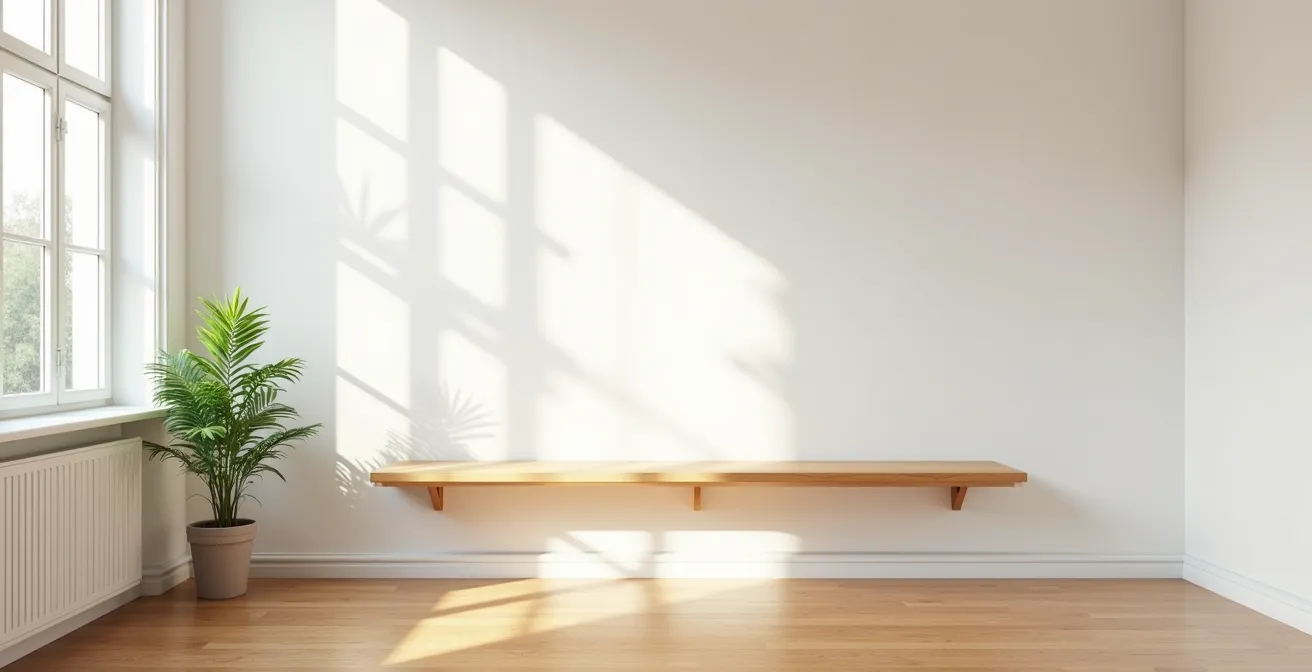
Living in a cramped UK flat often creates a cycle of clutter and stress. The common advice to simply ‘own less’ overlooks the real problem: spatial anxiety and decision fatigue. This guide reframes minimalism not as an aesthetic of emptiness, but as a practical system for making conscious choices. By treating your space, time, and possessions as a single ecosystem, you can ethically declutter, organize effectively, and create a home that is truly a sanctuary from city life.
The feeling is familiar to any young professional in a London flat: the walls feel a little closer each day, surfaces disappear under a tide of objects, and a low-level hum of stress emanates not from the street outside, but from the clutter within. We are told the solution is to declutter, to buy clever storage, to embrace minimalism. But often, this advice only leads to more pressure—the guilt of throwing things away, the frustration of organizing things you don’t even need, and the inevitable “rebound clutter” that fills the space you just cleared.
This approach misses the fundamental point. The goal isn’t just to have less stuff; it’s to reduce the constant mental load of managing it all. True minimalism, especially in a compact urban environment, is less about an empty-looking room and more about creating a calm, functional decision ecosystem. It’s about questioning the ‘why’ behind every object and understanding the impact it has on your most precious resources: your time, your mental energy, and your physical space.
What if the key wasn’t a ruthless clear-out, but a more thoughtful and ethical recalibration? This guide moves beyond generic tips to offer a spatial strategy tailored for small UK homes. We will explore how to let go of items without guilt, how to make conscious choices that prevent future clutter, and how to use every square inch of your flat—especially the vertical space—to build a home that supports your well-being, rather than drains it.
This article provides a complete framework for applying ethical minimalism to your home. The following sections will guide you through each step, from reclaiming your time to mastering vertical storage, creating a space that feels both larger and more serene.
Summary: A Practical Guide to Ethical Minimalism in a Compact Home
- Why Owning Less Stuff Actually Gives You More Free Time?
- How to Let Go of Gifts You Never Liked Without Guilt?
- Donating vs Selling: Which Is the Most Ethical Way to Clear Out?
- The Shopping Mistake That Refills Your Empty Space Within a Month
- How to Organize a Tiny Wardrobe to Make It Feel Like a Boutique?
- Why the Space Above Your Door Is the Best Storage You Are Not Using?
- Why Over-Exfoliating Is Making Your Breakouts Worse?
- How to Optimize Living Space in a 1-Bedroom Flat Using Vertical Storage?
Why Owning Less Stuff Actually Gives You More Free Time?
The promise of more free time is often associated with productivity hacks or outsourcing tasks, but one of the most significant time drains is hidden in plain sight: our possessions. Every item you own requires a portion of your time. It needs to be bought, stored, cleaned, maintained, and eventually, disposed of. This “life admin” for our belongings quietly eats away at our days. In fact, one blogger’s time study revealed that a minimalist lifestyle can save an average of 34 minutes per day on household maintenance alone.
Consider the time spent simply looking for things. A UK study found that the average person spends 8.5 minutes every day searching for lost items like keys, phones, and wallets. Over a year, that adds up to over 50 hours—more than a standard working week. When your home contains only the essentials, and each item has a designated place, this frantic searching time is virtually eliminated. This is the first, most immediate return on your investment in minimalism: you are not just clearing space, you are buying back time.
This reclaimed time extends beyond cleaning and searching. It also frees up significant mental bandwidth. The constant, low-level decision-making required by a cluttered environment—what to wear from an overflowing wardrobe, where to put down a book on a full table, what to do with a stack of mail—contributes to decision fatigue. By reducing the number of objects, you reduce the number of micro-decisions you have to make each day, freeing your mind to focus on what truly matters.
How to Let Go of Gifts You Never Liked Without Guilt?
One of the biggest emotional barriers to decluttering is the guilt associated with unwanted gifts. These items, given with love and good intentions, can become anchors of obligation in our homes. The key to letting them go is to reframe the purpose of the gift. The gift’s primary function—to express affection—was fulfilled the moment it was given and received. You are not obligated to keep the physical object forever, especially if it adds to your spatial anxiety.
A powerful technique is to separate the memory from the item. Create a “digital memory box” by taking a beautiful, well-lit photograph of the object. You can create an album on your phone or computer dedicated to these sentimental items. This act honours the memory and the giver while freeing you from the physical burden of the object itself. You are keeping the love, not the clutter.
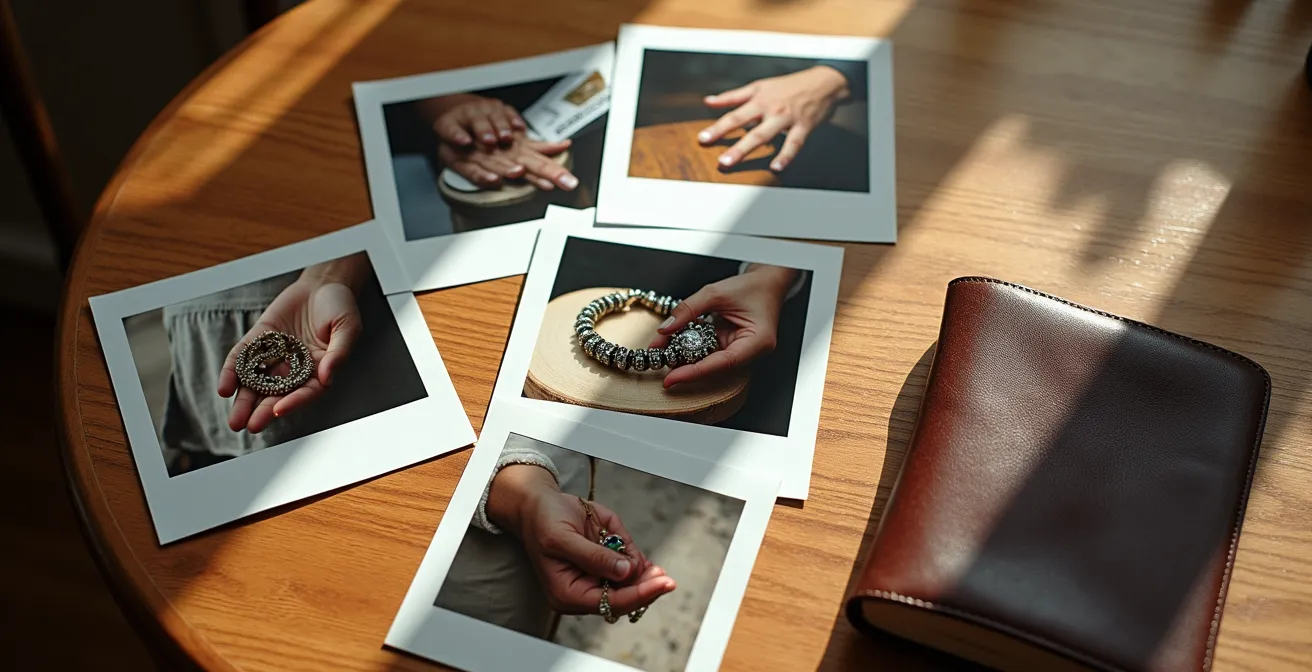
Furthermore, you can transform guilt into purpose by giving the item an intentional “second life.” Instead of a generic donation, consider if the item can directly benefit someone. A case study on UK charities like Smart Works, which provides professional clothing to women re-entering the workforce, highlights this perfectly. Donating a formal suit you never wear to a targeted charity feels far more meaningful than adding it to the mountain of unsorted donations, where a staggering 70% of unsold clothing is exported and often ends up in landfills. By finding the right home for your unwanted gift, you are extending its story in a positive way.
Donating vs Selling: Which Is the Most Ethical Way to Clear Out?
When it comes to decluttering, the default “ethical” option for many is to donate to a charity shop. Indeed, 53% of UK adults donate unwanted clothes this way. While well-intentioned, this is not always the most effective or environmentally sound choice. As previously mentioned, UK charities are often overwhelmed, and a large portion of donations may not end up being sold. The truly ethical choice is the one that gives your item the highest chance of being used and valued in its next life.
Selling your items, particularly high-quality or in-demand pieces, can be a more direct form of recycling. It ensures the item goes to someone who specifically wants it and is willing to invest in it, increasing the likelihood it will be cared for. This also provides you with a small financial return that can be reinvested into fewer, better-quality items that you will actually use—a cornerstone of sustainable minimalism. Platforms like Vinted, Depop, and eBay offer a direct route to an item’s next user.
The choice between donating and selling depends on three factors: the item’s condition and value, your available time and energy, and the most effective destination. A good framework is to think of it as a decision ecosystem. Low-value items or those needing a quick exit are great for targeted donations. For valuable, niche, or trendy items, selling is often the superior path. The following table provides a practical guide to UK resale platforms.
| Platform | Best For | Fees | Effort Level |
|---|---|---|---|
| Vinted | Clothing & Accessories | Buyer pays fees | Low |
| Depop | Trendy/Vintage Items | 10% seller fee | Medium |
| eBay | Everything | 12.8% final value fee | High |
| Facebook Marketplace | Local sales | No fees | Low |
The Shopping Mistake That Refills Your Empty Space Within a Month
You’ve successfully decluttered. Your space feels calm and open. Yet, within weeks, new items start to creep in, and the clutter returns. This phenomenon, “rebound clutter,” happens because decluttering only addresses the symptom, not the cause: our purchasing habits. The single biggest mistake is not creating intentional friction between impulse and purchase. In our hyper-connected world, this friction has been almost entirely removed, especially through our digital devices.
The trend towards minimalism is strong, with a 2024 survey revealing that 64% of UK millennials and Gen Z actively reduced their possessions. However, a parallel digital life often sabotages these efforts. Targeted ads, one-click purchasing, and the constant exposure to trends on social media create a frictionless path to consumption. A fascinating study on digital minimalism found that 43% of digital minimalists set specific device-free times daily, which significantly reduced their impulse shopping and improved their mental clarity.
To combat this, you must consciously re-introduce friction. Unsubscribe from marketing emails. Unfollow accounts that trigger a desire to shop. Implement a mandatory “cooling-off” period for all non-essential purchases; put an item in your online cart but wait 48 hours before buying. Often, the impulse will have passed. Another effective strategy is the “one in, one out” rule: for every new item you bring into your home, a similar item must leave. This forces you to evaluate if the new purchase is truly an upgrade or just an addition.
How to Organize a Tiny Wardrobe to Make It Feel Like a Boutique?
A tiny wardrobe in a London flat can be a source of daily frustration. The solution isn’t to cram more in, but to curate it like a high-end boutique. The boutique philosophy is about showcasing a limited, carefully selected collection where every item is visible, accessible, and valued. This starts with creating a capsule wardrobe, a collection of 30-40 versatile pieces that can be mixed and matched.
For the variable UK weather, this means focusing on quality over quantity, especially with layering pieces. Invest in high-quality basics: a great waterproof jacket, a few merino wool sweaters, and moisture-wicking base layers. These core items will serve you far better than a dozen cheap, trend-driven pieces. The goal is not deprivation, but an upgrade in quality and functionality. This is where minimalism can actually feel luxurious; you own fewer things, but the things you do own are better.
The second step is presentation. Create a sense of space and calm within the wardrobe. Use matching, slimline hangers to create a uniform look. Group clothes by category, then by colour. Leave a small gap between each hanger—this “breathing room” is the secret to the boutique feel. It signals that your collection is curated, not crammed. Finally, use good lighting. A simple battery-powered LED strip inside the wardrobe can transform it from a dark cupboard into a welcoming display.
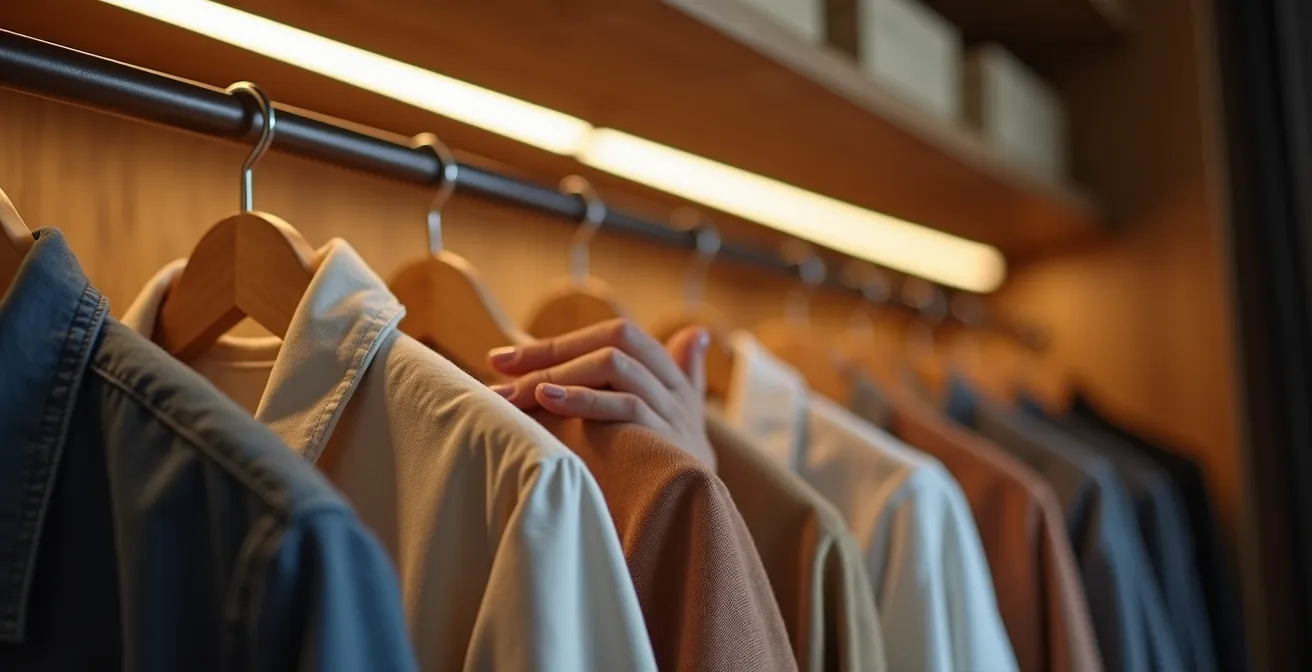
This approach changes your relationship with your clothes. Instead of a daily struggle, getting dressed becomes a calm, pleasant experience. You see everything you own, you love every piece, and putting an outfit together is effortless. It’s the ultimate expression of owning your style, not being owned by your clothes.
Why the Space Above Your Door Is the Best Storage You Are Not Using?
In a small flat, every square inch counts. Yet, we are conditioned to think horizontally—about floor space and surface area. The single most underutilised asset in most rooms is the vertical space, specifically the “high real estate” above doors and windows. This area is perfect for storing items that you don’t need to access daily, such as seasonal clothing, spare bedding, or sentimental keepsakes.
For renters, the fear of drilling holes and losing a deposit is a major barrier. However, a wealth of renter-friendly solutions now exist. Heavy-duty adhesive hooks and shelves can hold significant weight without leaving a mark, and tension rods fitted inside door frames can support lightweight baskets. A case study of UK renters showed widespread success using products from brands like IKEA and Muji to create uniform, aesthetic high storage. The key is to use matching boxes or baskets to create an intentional, organized look, rather than a jumble of mismatched items.
This strategy does more than just free up floor space. It fundamentally changes the perceived volume of a room. By drawing the eye upward, you create an illusion of height and spaciousness. It also helps to enforce a healthy decluttering habit: because the storage is less accessible, you are forced to be more intentional about what you store there. It becomes a natural home for the “once a year” items, clearing your primary, eye-level storage for the things you use every day.
Your Action Plan: No-Drill Installation Guide for UK Renters
- Assess the wall: Check that the surface above your door is smooth and suitable for adhesive products.
- Select your solution: Use heavy-duty command strips rated for at least 7.5kg or install tension rods between door frames for lightweight items.
- Source your products: Find removable adhesive shelving and strips at UK stores like B&Q, Wilko, or online.
- Test with care: After installation, test weight limits by gradually loading the shelf or basket over a 24-hour period.
- Document for your deposit: Take photos of the installation and the clean wall after removal for your deposit protection scheme.
Key Takeaways
- Minimalism saves quantifiable time by reducing maintenance and search time for items.
- Let go of gift-related guilt by separating the memory from the object and finding it an intentional “second life.”
- The most ethical way to clear out items is not always donation; selling ensures an item is valued and used.
- Avoid “rebound clutter” by creating intentional friction in your purchasing habits, especially online.
- Treat vertical space, like the area above doors, as valuable real estate for renter-friendly storage.
Why Over-Exfoliating Is Making Your Breakouts Worse?
In skincare, there’s a common mistake born of good intentions: in a panic to clear a breakout, we over-exfoliate, stripping the skin’s protective barrier. This aggression causes the skin to panic and overproduce oil, making the initial problem even worse. This exact principle applies to decluttering. A harsh, overly aggressive clear-out can create a psychological void, a phenomenon sometimes called “rebound clutter.”
This idea is perfectly captured by a Minimalism Psychology Expert, who warns: “A harsh, overly aggressive clear-out can create a psychological void, leading to impulse buying – ‘rebound clutter’ – just as stripped skin overproduces oil.” This is a crucial insight. While minimalism is often seen as a solution to stress, the process itself can be a source of anxiety. A 2023 Statista survey found that 36% of minimalists felt stressed by the constant pressure of maintenance and the fear of “doing it wrong.”

Just as a gentle, consistent skincare routine is more effective than a single harsh treatment, a slow, intentional approach to minimalism yields better long-term results. Instead of a frantic weekend purge, try decluttering one small area at a time—a single drawer, one shelf. This measured approach allows you to adjust emotionally and prevents the panicked feeling of emptiness that can trigger compensatory shopping. The goal is to calm your environment, not to wage war on it.
How to Optimize Living Space in a 1-Bedroom Flat Using Vertical Storage?
The principles of minimalism and vertical storage come together to form a holistic strategy for optimizing a one-bedroom flat. It’s not about isolated solutions—a shelf here, a box there—but about seeing your entire home as a three-dimensional space. In many UK properties, especially period conversions, this means leveraging architectural quirks. An excellent example is Sophie, a designer in a Birmingham Victorian apartment, who used the full height of the alcoves beside her chimney breast for storage, preserving the flat’s character while maximizing its capacity.
This vertical approach is a response to a growing need, reflected in the fact that the minimalist lifestyle products market reached £8 billion in the UK in 2024. The strategy is to move from a horizontal to a vertical mindset. Think tall, narrow bookshelves instead of wide, low ones. Use wall-mounted shelving that goes all the way to the ceiling. This draws the eye upward, creating a sense of spaciousness, and frees up precious floor space, making the room feel larger and less cluttered.
Ultimately, optimizing your living space is the physical manifestation of the mental clarity that ethical minimalism provides. By being intentional with what you keep and strategic about where you keep it, you create a home that is an active participant in your well-being. It becomes a calm, orderly, and functional base from which to engage with the vibrant, but often chaotic, city life outside your door. It is the ultimate act of reclaiming your personal environment.
Begin today by choosing one small area—a single shelf, a drawer, or the space above one door—and apply these principles. The journey to a calmer, more spacious home starts not with a massive upheaval, but with a single, intentional choice.