
The most rewarding way to experience Scotland is by shifting from a low-impact mindset to one of active restoration, where your visit directly contributes to the health of its ecosystems and communities.
- Engaging with rewilding projects allows you to witness and support dramatic biodiversity recovery.
- Conscious spending in locally-owned businesses ensures your tourism money strengthens the regional economy.
Recommendation: Prioritize planning your trip around businesses and experiences with verifiable certifications, turning your holiday into a positive force for conservation.
The allure of Scotland is undeniable. It’s a land of sweeping glens, brooding lochs, and mountains that seem to hold ancient stories. For the UK-based traveller seeking a profound connection with nature, it presents a world-class staycation. The standard advice for responsible travel is well-known: leave no trace, stick to the paths, and respect the wildlife. These are essential principles, but they frame our presence as a neutral or slightly negative force to be minimized. We are told to reduce our footprint, a necessary but incomplete picture of our potential role.
But what if we could aim higher? What if a visit to these breathtaking landscapes wasn’t just about taking pictures and leaving nothing behind, but about actively participating in their restoration and enrichment? The true potential of sustainable travel in Scotland lies in understanding the interconnected systems—ecological, economic, and cultural—that make this place unique. It’s about moving beyond a passive, low-impact approach to embrace a model of restorative tourism, where every choice, from the train you take to the tweed jacket you buy, becomes a positive contribution.
This guide will explore that very idea. We will delve into how your visit can support ambitious rewilding projects, how to pack and travel in a way that genuinely minimizes waste, and how to ensure your spending power directly benefits the local communities that are the lifeblood of the Highlands. It’s a journey from being a mere spectator to becoming a valued partner in the preservation and flourishing of Scotland’s natural and cultural heritage.
To navigate these concepts, this article explores the practical steps and mindset shifts needed to transform your trip. The following sections provide a complete framework for a truly restorative Scottish adventure.
Summary: A Guide to Restorative Travel in the Scottish Highlands
- Why visiting a rewilding estate helps restore British biodiversity?
- How to pack for a hiking trip without using single-use plastics?
- Train vs car: Which is the best way to explore the highlands sustainably?
- The “Insta-tourist” behavior that destroys fragile ecosystems
- How to ensure your tourism money actually reaches the local community?
- Greenwashing vs true sustainability: Which certifications can you trust?
- Why Gothic architecture still evokes awe in the 21st century?
- How sustainable fashion allows self-expression without harming the planet?
Why visiting a rewilding estate helps restore British biodiversity?
The concept of “leaving no trace” is the baseline for responsible tourism, but rewilding offers a more profound opportunity: to leave a positive handprint. Rewilding is not simply about conservation; it is the active process of large-scale ecosystem restoration, allowing natural processes to reclaim and shape the land. In Scotland, pioneering projects are demonstrating that tourism can be a powerful engine for this ecological healing. When you choose to visit and stay at a rewilding estate, your tourism money directly funds the work of bringing back lost species and habitats.
The results are tangible and inspiring. At the Dundreggan Rewilding Centre in the Highlands, for example, the patient work of restoring the Caledonian Forest has led to a remarkable biodiversity recovery, with over 4,000 species now recorded and even the return of golden eagles after a 40-year absence. This isn’t just about planting trees; it’s about re-establishing complex, resilient food webs. Visiting these areas provides a rare chance to witness nature’s recovery firsthand, transforming your holiday from a simple sightseeing trip into an investment in the UK’s natural future. It fundamentally changes the visitor’s role from a passive consumer of views to an active supporter of ecological regeneration.
This approach reframes the entire purpose of a nature-based holiday. As Steve Micklewright, the CEO of Trees for Life, articulates, this vision is about more than just ecology:
Rewilding is about hope. It gives us a practical framework to follow that supports nature, people and the planet.
– Steve Micklewright, Trees for Life CEO
By choosing these destinations, you are casting a vote for a wilder, more hopeful future, proving that a thriving economy and a thriving ecosystem can go hand in hand. It’s a powerful demonstration of how our desire to connect with wild places can be the very thing that helps them heal.
How to pack for a hiking trip without using single-use plastics?
The principle of restorative travel extends right down to the contents of your backpack. A commitment to sustainability begins before you even set foot on the trail. The challenge of packing for a hiking trip, especially in a place as wild as the Scottish Highlands, often pushes us toward convenience items packaged in single-use plastics. However, a zero-waste approach is not only achievable but deeply rewarding, aligning your personal habits with the conservation ethos of the landscape you’re exploring. The key is to shift from a disposable mindset to one of durability and circularity.
This means investing in gear designed for a lifetime of use and repair, rather than items that will be discarded after a single trip. It involves planning your provisions to eliminate packaging waste. Think reusable water bottles with filters, solid toiletries instead of mini plastic bottles, and beeswax wraps or silicone bags for your sandwiches and snacks. Many towns near popular hiking areas in Scotland now have zero-waste shops or farm stands where you can stock up on supplies using your own containers, directly supporting local producers while bypassing the supermarket plastics aisle entirely.
The textures and materials of your gear can become a source of connection to the natural world. Focusing on items made from sustainable and long-lasting materials reinforces a deeper appreciation for craftsmanship and the environment.

As this image suggests, materials like waxed canvas, bamboo, and responsibly sourced wool are not just functional; they carry a story of sustainability. Opting for equipment rental services for specialized gear you’ll only use once can also be a smart choice, reducing both consumption and the financial barrier to entry for quality outdoor experiences. This thoughtful approach to packing transforms a simple logistical task into a powerful statement of your values.
Train vs car: Which is the best way to explore the highlands sustainably?
The journey is as much a part of the experience as the destination, and your choice of transport has the single biggest impact on your trip’s carbon footprint. While the freedom of a car is tempting for exploring the winding roads of the Highlands, the train offers a far more sustainable and, arguably, more immersive alternative. The scenic rail lines of Scotland, like the West Highland Line to Mallaig, are destinations in themselves, offering world-class views from a comfortable seat while drastically reducing your environmental impact.
The numbers are stark. According to Net Zero Scotland, choosing to travel by train instead of a car can result in a staggering 73% reduction in CO2 emissions per journey. This isn’t a minor tweak; it’s a fundamental shift in your travel footprint. While electric cars are an improvement over petrol, they don’t solve issues of road congestion, wildlife disturbance, or the carbon cost of their manufacturing. The train, especially on electrified routes, remains the gold standard for low-carbon travel over long distances, allowing you to relax and watch the landscape unfold rather than focusing on the road.
To make an informed decision, it’s helpful to see the data broken down. The following comparison illustrates just how significant the differences between transport modes are, not just for a single trip but over a year of regular travel.
| Transport Mode | CO2 per km | Annual Savings (Edinburgh-Glasgow) |
|---|---|---|
| Train (Electric) | 35g | Baseline |
| Bus/Coach | 85g | +0.5 tonnes CO2 |
| Electric Car (solo) | 47g | +0.1 tonnes CO2 |
| Petrol Car (solo) | 170g | +1.5 tonnes CO2 |
| Domestic Flight | 246g | +2.3 tonnes CO2 |
This data from Transform Scotland clearly shows that even a solo trip in an electric car has a higher carbon footprint per kilometre than an electric train. For many Highland itineraries, a hybrid approach works best: take the train to a regional hub and then use local buses or hire a bike for shorter excursions. This systemic choice respects the scale and fragility of the landscape you’ve come to admire.
The “Insta-tourist” behavior that destroys fragile ecosystems
In the age of social media, the desire to capture and share the perfect photo can have unintended and devastating consequences for fragile ecosystems. The phenomenon of “Insta-tourism” often leads to overcrowding at specific, geotagged locations, causing soil erosion, disturbance to wildlife, and damage to delicate flora. While sharing the beauty of Scotland is natural, certain behaviours—like venturing off-path for a unique angle or publicizing the exact location of rare wildlife—can directly harm the very things we appreciate.
A particularly poignant example in Scotland is the Capercaillie, a magnificent and highly endangered woodland grouse. These birds are extremely sensitive to human disturbance, especially during their breeding season. A single encounter with an off-leash dog or a photographer trying to get too close can cause a hen to abandon her nest, dooming her chicks. Responsible tour operators understand this threat intimately and build their entire business model around protecting vulnerable species. They prove that you can have a profound wildlife experience without causing harm.
Case Study: Capercaillie Protection Through Visitor Management
Wildlife tour operator Wild Discovery exemplifies a responsible approach. The company’s guides are trained to actively avoid known Capercaillie habitats during their tours, prioritizing the birds’ welfare over a potential client sighting. Instead of contributing to the problem of disturbance, they educate their guests on the threats the species faces. Furthermore, they turn the tourist’s phone into a conservation tool by promoting the use of citizen science apps that gamify wildlife logging for scientific databases, deliberately steering visitors away from location-specific social media posts that could endanger the animals.
This approach highlights a crucial shift in mindset: the best wildlife encounter is one that doesn’t disturb the animal. It encourages us to find value in the broader landscape and the health of the entire ecosystem, rather than chasing a single, shareable image. The most responsible action a visitor can take is to choose guides and companies that explicitly prioritize conservation and to resist the urge to geotag sensitive locations. Your restraint is a direct act of preservation.
How to ensure your tourism money actually reaches the local community?
One of the most powerful tools a sustainable traveller has is their wallet. Where you choose to spend your money can either support the local fabric of a place or contribute to “economic leakage,” where profits are siphoned off to corporate headquarters far from the community you’re visiting. Ensuring your spending genuinely benefits the people who live and work in the Highlands requires a conscious and discerning approach. It’s about looking beyond the tartan-draped shopfronts to understand who truly owns and operates the businesses you support.
The goal is to seek out businesses with deep roots in the area. This means favouring family-run guesthouses over international hotel chains, dining at independent restaurants that source their ingredients from nearby farms, and buying crafts directly from the artisans who make them. These choices create a virtuous cycle: your money helps sustain local jobs, preserves traditional skills, and fosters a sense of community pride, all of which contribute to a more authentic and enriching visitor experience for everyone. It’s the difference between a transactional visit and a relational one.
This is where your observational skills as a traveller come into play. Before booking, check the “About Us” page on a business’s website to see if it’s locally owned. When you arrive, look for official accreditations like the Galloway and Southern Ayrshire Biosphere Certification Mark, which is awarded to businesses that meet high standards of sustainability and local commitment. To make this process clearer, here is a practical checklist for directing your funds effectively.
Your Five-Point Audit for Supporting Local Communities
- Check the Structure: Look for businesses registered as Community Interest Companies (CICs), where profits are legally required to be reinvested into the local community.
- Verify Ownership: Scrutinize ‘About Us’ pages and on-site information to confirm family or local ownership and a commitment to hiring local staff.
- Look for Marks of Trust: Prioritize businesses that display the official Biosphere Certification Mark or are members of credible local tourism associations.
- Question the Supply Chain: Choose accommodations and restaurants that proudly advertise their use of produce and goods from named local farms, fisheries, and artisans.
- Book Local Expertise: Hire certified Biosphere Guides or other guides who are verified local residents, ensuring you receive an authentic perspective while supporting a local expert.
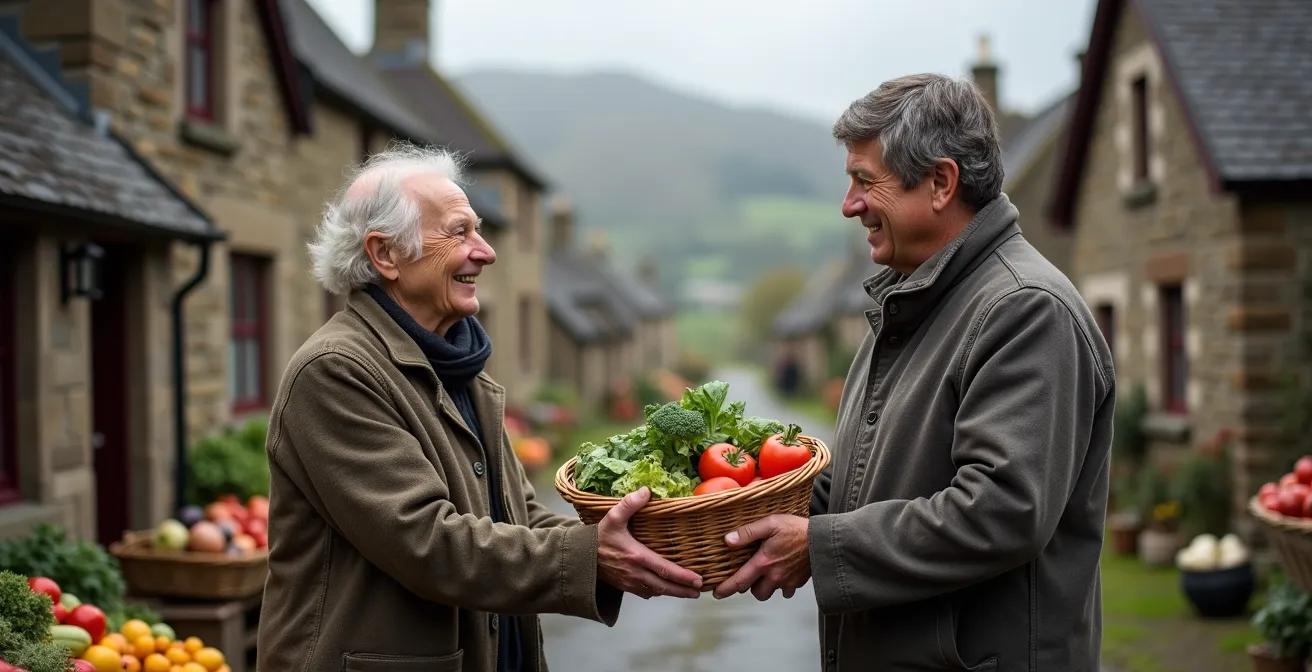
Ultimately, supporting the local economy is about fostering human connection. It’s the conversation with the B&B owner, the story from the local guide, and the taste of produce grown just a few miles away. These are the experiences that build lasting memories and ensure that tourism remains a force for good.
Greenwashing vs true sustainability: Which certifications can you trust?
As sustainability becomes a major selling point, the tourism industry is flooded with vague claims of being “eco-friendly,” “green,” or “natural.” This “greenwashing” can make it incredibly difficult for a well-intentioned traveller to distinguish between genuine commitment and clever marketing. In Scotland, however, a robust ecosystem of certifications exists to help you make informed choices. Understanding these labels is the key to seeing past the greenwash and identifying businesses that are truly walking the talk.
Not all certifications are created equal. The most trustworthy schemes are those that involve rigorous, third-party audits, where an independent body verifies a business’s claims against a set of stringent criteria. Self-declared labels or awards based on peer reviews are better than nothing, but they lack the objective scrutiny of a formal audit. In Scotland, the Green Tourism Business Scheme is a widely respected standard. It assesses businesses on everything from energy and water use to community engagement and procurement policies, awarding Bronze, Silver, and Gold levels based on performance. With over 2,400 Scottish businesses certified under this scheme, it provides a reliable starting point for your research.
To navigate this landscape, it’s useful to think of certifications on a spectrum of trustworthiness. The following table, based on guidance from VisitScotland, provides a clear framework for evaluating the claims you encounter.
| Certification Level | Verification | Examples | Trust Rating |
|---|---|---|---|
| Marketing-Led | Self-declared | Generic ‘eco-friendly’ claims | Low |
| Industry Standard | Peer review | Green Tourism Bronze | Medium |
| Third-Party Audited | External audit | Green Tourism Gold, B Corp | High |
| Radical Transparency | Public data | Published energy/waste metrics | Highest |
The highest level of trust comes from businesses that practice radical transparency—those that not only undergo audits but also publicly share their performance data. While rare, these operators demonstrate the deepest commitment. By learning to read these signals, you can confidently choose hotels, tours, and attractions that align with your values, ensuring your trip supports real, measurable sustainability efforts.
Why Gothic architecture still evokes awe in the 21st century?
At first glance, the awe-inspiring Gothic ruins scattered across Scotland—like Elgin Cathedral or Melrose Abbey—might seem like purely historical or aesthetic attractions. Their soaring arches and intricate stonework connect us to a deep cultural past. However, a restorative travel mindset invites us to see them through an ecological lens as well. These ancient structures are not inert monuments; they are living, breathing ecosystems that demonstrate a profound link between heritage and nature.
Over centuries, these ruins have become unique, protected habitats. Their weathered stones provide the perfect substrate for rare lichens and ferns, while their crumbling crevices offer sanctuary for bats, swifts, and owls. In a very real sense, they have been “rewilded” by nature. A study on European rewilding potential highlights how such areas enhance natural capital, fostering new opportunities. These structures are also monuments to a pre-industrial form of sustainability. Built entirely from local stone by local craftspeople, they embody a principle of hyper-localism that modern eco-lodge designers now seek to emulate through practices like biomimicry and the use of locally-sourced, natural materials.
Case Study: Gothic Ruins as Biodiversity Hotspots
Scottish Gothic ruins have evolved into vital, protected ecosystems. Research shows they support a remarkable diversity of life, from rare flora to protected animal species. This accidental conservation demonstrates the deep resilience of nature. These structures serve as a historical blueprint for sustainable building, showcasing the centuries-old use of local stone and craftsmanship. These very principles are now being rediscovered and applied in modern eco-lodge design, which uses biomimetic architecture to create buildings that are in harmony with their environment, proving that the past holds powerful lessons for a sustainable future.
Visiting these sites with this dual perspective—appreciating both their architectural grandeur and their ecological function—enriches the experience. It allows you to see them not as relics of a dead past, but as dynamic places where culture and nature are intricately and beautifully interwoven. They are a testament to the fact that what we build can, over time, become a refuge for the wild.
Key takeaways
- Your visit can be a direct investment in ecological restoration by supporting rewilding projects.
- Directing your spending towards locally-owned and certified businesses is a powerful act of community support.
- Learning to scrutinize sustainability claims and understand certifications is essential to avoid greenwashing.
How sustainable fashion allows self-expression without harming the planet?
The philosophy of restorative travel finds a perfect metaphor in Scotland’s heritage textiles. In a world dominated by fast fashion—a cycle of cheap, disposable clothing with a devastating environmental cost—materials like Harris Tweed and Fair Isle knitwear represent an enduring alternative. They are the original “slow fashion,” embodying a system where self-expression, cultural identity, and sustainability are woven together as one.
These textiles are not just clothing; they are stories of place. Harris Tweed, for example, is protected by an Act of Parliament which dictates it must be made from 100% pure new wool, dyed, spun, and handwoven by islanders at their homes in the Outer Hebrides of Scotland. This process supports a remote rural economy, preserves generations of traditional skills, and results in a fabric so durable it is often passed down through generations. It is the antithesis of throwaway culture. By choosing to invest in a piece of heritage knitwear or tweed, you are not just acquiring a beautiful garment; you are becoming a custodian of a sustainable cultural practice.
This approach to a travel wardrobe encourages a philosophy of “buy less, but buy better.” It’s about choosing pieces with integrity and a story. It also embraces practices like visible mending, where a repair is not hidden but celebrated, adding to the garment’s unique history and creating a “travelogue” on your clothing. Supporting these local textile communities through direct purchases on your travels connects you to the very fabric of Scottish culture, allowing for profound self-expression that is deeply rooted in place and respectful of the planet. It proves that style and sustainability are not mutually exclusive; in Scotland, they are part of the same tradition.
By embracing this mindset—seeing the interconnectedness of ecology, economy, and culture—your next trip to Scotland can become more than just a holiday. It can be a meaningful act of participation in the future of one of the world’s most stunning landscapes. The next logical step is to start planning your own restorative journey using these principles.